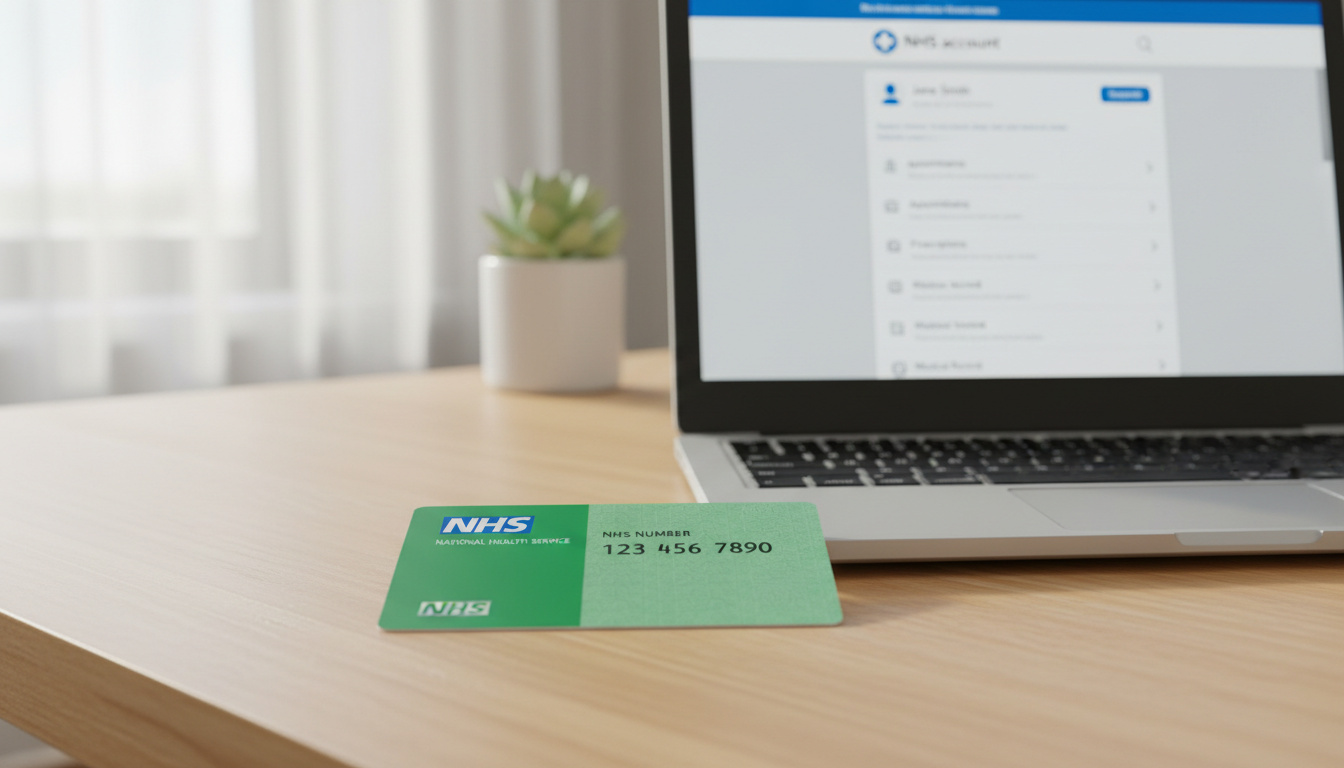

Every patient registered with the NHS in England, Wales, or the Isle of Man receives a unique identifier that follows them throughout their medical life. This ten-digit sequence connects your GP records, hospital visits, prescriptions, and test results into a single coherent history. Understanding how this system works—and how to locate your own identifier when needed—ensures smoother access to healthcare services.
The NHS number functions as the cornerstone of the Personal Demographics Service (PDS), a national database that stores basic information about patients. Unlike temporary reference codes used by individual hospitals, this number remains consistent across all NHS settings, reducing the risk of misidentification and ensuring that critical medical information reaches the right clinician at the right time.
Since its mandatory introduction in April 1997, the system has evolved from paper-based records to digital integration, with recent updates allowing patients to access their identifier through smartphones and online portals.
What is an NHS number?
A unique 10-digit identifier allocated to every registered patient
Displayed as 3-3-4 digits (e.g., 485 777 3456) for readability
Linking patient records across GP practices, hospitals, and pharmacies
Available on medical cards, appointment letters, or via digital services
- Lifetime validity: Issued at birth (since October 2002) or upon first GP registration, remaining unchanged throughout life except in cases of adoption or gender reassignment
- Structural integrity: The first nine digits form the core identifier, while the tenth digit serves as a mathematical check using the Modulus 11 algorithm
- Invalid ranges: Numbers ending in XXXX 999 are reserved and never issued to patients
- Regional scope: Valid across England, Wales, and the Isle of Man, though distinct systems operate in Scotland and Northern Ireland
- Digital integration: Accessible through the NHS App and online summary care records without carrying physical documentation
- Legal requirement: NHS communications must display this identifier to ensure accurate record matching
| Aspect | Details |
|---|---|
| Total digits | 10 numeric characters |
| Display format | 3-3-4 (e.g., 123 456 7890) |
| Electronic entry | 10 continuous digits, no spaces |
| Check digit | 10th digit validates via Modulus 11 |
| System introduced | 1996 (mandatory from April 1997) |
| Birth allocation | October 2002 onwards |
| Database | Personal Demographics Service (PDS) |
| Exceptions | New number issued for adoption or identity protection |
How do I find my NHS number?
Where is my NHS number located?
Physical documentation remains the most reliable source for locating your identifier. GP appointment letters, prescription forms, and hospital correspondence typically display the number prominently in the header. Patients registered before the digital transition may possess a medical card issued by their GP practice. Test results and screening invitations also routinely include this reference.
If you cannot locate paper records, your registered GP practice holds this information in your clinical records. Reception staff can confirm the number over the phone or in person, provided you pass identity verification protocols.
Can I find my NHS number online?
NHS England provides an online lookup service available to patients registered with GP practices in England. The system requires your full name, date of birth, and the postcode associated with your GP registration. Upon verification, the service transmits your number via text message, email, or postal letter within minutes to hours.
The NHS App offers an alternative digital pathway. Once logged into your NHS account, the number appears within your profile details alongside your summary care record. This method proves particularly useful when filling out forms remotely or when physical documents are unavailable.
Online lookup services currently serve England exclusively. Patients in Wales or the Isle of Man must contact their GP directly. To use the digital service, you must already have an active GP registration; unregistered individuals cannot retrieve a number online and must register with a practice first.
Is an NHS number the same as a National Insurance number?
| Feature | NHS Number | National Insurance Number |
|---|---|---|
| Primary purpose | Patient identification and medical record linking | Tax and benefits administration |
| Format | 10 digits (e.g., 485 777 3456) | 9 digits with prefix/suffix letters (e.g., AB 12 34 56 C) |
| Issuing authority | NHS England (PDS) | HM Revenue & Customs (HMRC) |
| When issued | At birth or first NHS contact | Before 16th birthday or when starting work |
| Healthcare access | Does not determine eligibility for free care | Irrelevant to medical treatment |
Do I need my NHS number?
While you can receive treatment without memorizing this sequence, having it readily available accelerates administrative processes. Hospital referrals and dental services use it to pull up your history. Emergency departments can locate your records faster when the number accompanies your arrival. However, the absence of this identifier never prevents urgent care.
Electronic systems now reduce the burden of memorization. Many services can locate you using your name, date of birth, and postcode, though providing the exact number eliminates ambiguity when similar names exist in the database.
What if I don’t know or have lost my NHS number?
No formal replacement process exists because the NHS number is not a physical object but a data entry in the national database. You cannot “lose” the number itself, only lose track of which digits belong to you. Retrieval involves the same methods as initial lookup: checking old medical paperwork, contacting your GP, or using the online service.
Unlike bank cards or driving licences, the NHS number requires no replacement fee or reissuance application. If you possess an old medical card showing an outdated format (containing letters and numbers), this represents a superseded system discontinued in 1997. The current 10-digit format remains consistent regardless of how many years have passed since issuance.
How to get a new NHS number if lost?
Strictly speaking, you do not obtain a “new” number unless your identity circumstances fundamentally change. Adoption, gender reassignment, or witness protection programs trigger the issuance of a new unlinked identifier to sever connections with previous medical histories. For standard loss of documentation, you simply rediscover your existing number.
Unregistered patients cannot retrieve a number because one does not exist in the system. If you have never registered with a GP practice in England, Wales, or the Isle of Man, you must complete registration first. The practice will then allocate a number within the PDS, typically within a few days of your registration processing.
When did the NHS number system begin?
- 1996: The 10-digit numeric system launches, replacing earlier letter-digit combinations that varied by region
- April 1997: Use becomes mandatory across all NHS trusts, ensuring consistent identification nationwide
- October 2002: Automatic allocation at birth begins for babies born in England and Wales
- Mid-2010s: NHS App development begins, eventually allowing patients to view their number digitally
- 2020-2023: Expansion of online lookup services and integration with summary care records improves accessibility
What is established and what remains uncertain about NHS numbers?
| Established Facts | Uncertain or Variable Information |
|---|---|
| Format is always 10 digits in 3-3-4 display | Processing times for new registrations vary by practice workload |
| Modulus 11 algorithm validates the check digit | Availability of online lookup excludes Northern Ireland and Scotland |
| Lifetime validity except specific identity changes | Exact duration to receive number after birth registration can differ |
| Managed within the Personal Demographics Service | Local practice policies on verbal disclosure over the phone |
What role does the NHS number play in the healthcare system?
The identifier serves as the anchor for patient safety initiatives across the National Health Service. NHS England mandates its inclusion on all patient communications to ensure that blood tests, X-rays, and referral letters attach to the correct individual. This reduces the risk of treatment errors caused by confusing similar names or outdated addresses.
Integration with the Summary Care Record allows emergency clinicians to access allergy information and current medications even when patients are unconscious or unable to communicate. The system supports longitudinal health tracking from birth through old age, creating continuity as patients move between cities or change GP practices.
For those navigating early childhood services, understanding documentation parallels the importance of tracking developmental milestones. Resources like the Birth to 5 Matters – Essential Guide for EYFS Practitioners demonstrate how consistent identification supports health and educational coordination.
What guidance do NHS authorities provide?
The NHS number is the unique identifier for a patient within the NHS in England, Wales, and the Isle of Man. It is mandatory for this number to be displayed on all patient communications to support accurate record linking and safer care.
NHS England Official Guidance
Patients can find their NHS number on any letter or document received from the NHS, including prescriptions, test results, and hospital appointment letters. Alternatively, they can use the online service or contact their GP practice.
Mersey West Lancashire NHS Trust
How can you ensure you always have your NHS number when needed?
Store your number in your phone’s notes app or password manager, photograph your medical card if you possess one, and verify that your GP practice holds your current contact details. Regular users of the NHS App can rely on digital access, though maintaining awareness of the digits provides backup during system outages. Proactive management of this identifier parallels other health-conscious behaviors, much like understanding nutritional strategies outlined in Is Fasting Good for You – Benefits, Risks and Science, where preparation and knowledge combine to support wellbeing.
Common questions
How many digits is an NHS number?
An NHS number contains exactly 10 digits, displayed in a 3-3-4 format (e.g., 123 456 7890) for readability, though electronic systems accept them as continuous numbers.
Can I find my NHS number online?
Yes, if registered with a GP in England. Visit nhs.uk/nhs-services/find-nhs-number/ and provide your name, date of birth, and GP postcode to receive it via text, email, or letter.
Do I need my NHS number for a GP appointment?
No, practices can locate you using your name and date of birth. However, providing the number speeds up the process and ensures accurate record matching.
What if I was born before 2002?
You received your number upon first registering with a GP practice or accessing NHS care after 1997. Check old medical letters or contact your current GP to retrieve it.
Is my NHS number on my prescription?
Yes, prescription forms and pharmacy labels typically display your NHS number in the header or patient details section.
Can I have more than one NHS number?
Rarely. Duplicate numbers sometimes occur during administrative errors when moving between regions. If discovered, NHS authorities merge the records and retire the duplicate to maintain a single continuous history.
Related stories





Isabelle Knight is TV & Streaming Editor at StoryNative.uk, covering television, streaming platforms, broadcast schedules and platform news.