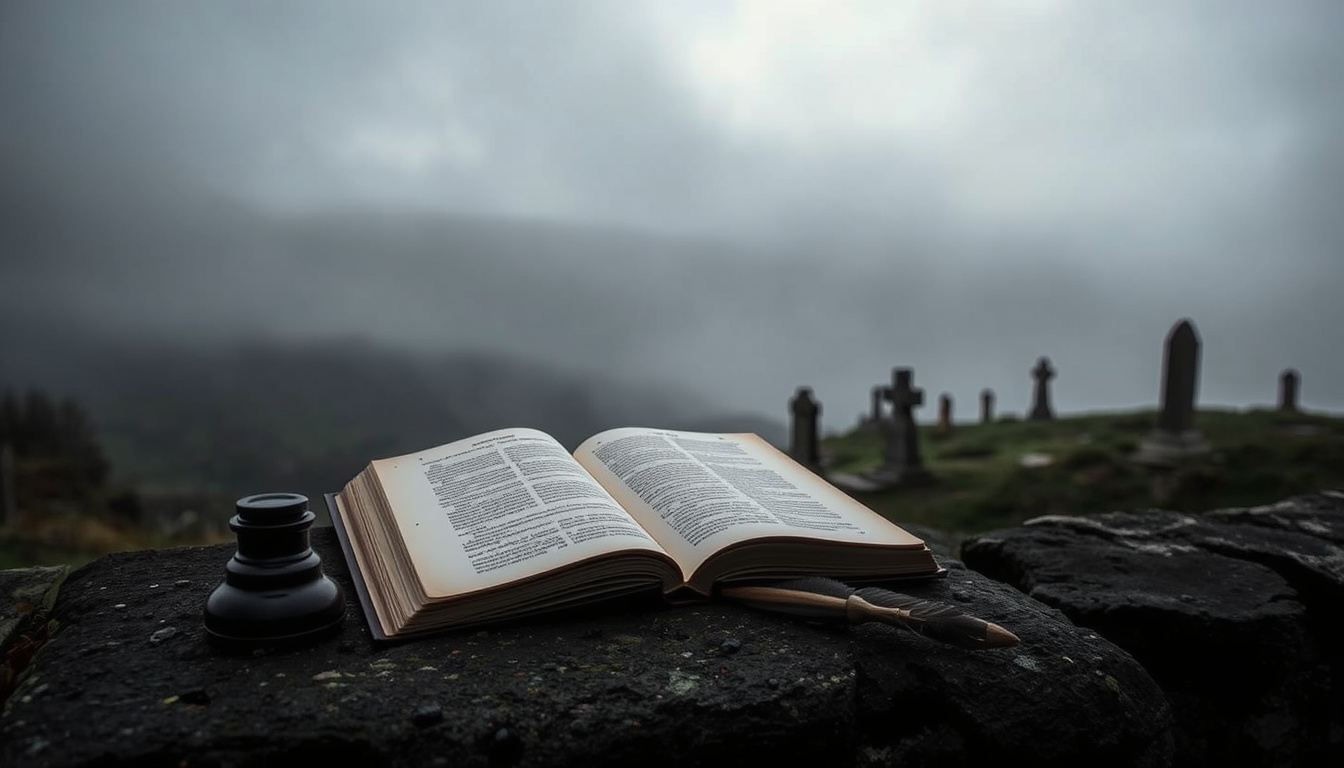
In the remote village of Haworth, West Yorkshire, three sisters from a modest parsonage household changed the course of English literature. Charlotte, Emily, and Anne Brontë, writing under male pseudonyms in the 1840s, produced novels that were celebrated, scandalised, and eventually recognised as masterpieces. Their lives were short, marked by illness and loss, but their literary output continues to resonate with readers around the world.
The Brontë sisters were born in Thornton and raised in the Haworth Parsonage, a stark stone building on the edge of the Yorkshire moors. That landscape—wild, windswept, and isolated—shaped the imaginative worlds they created. Between 1846 and 1847, all three sisters saw their first works published, though the public had no idea the authors were women from a tiny northern village.
Today, the Brontë Parsonage Museum preserves their living quarters and personal possessions, drawing thousands of visitors each year. The sisters’ story—brilliant, tragic, and fiercely independent—has become as compelling as the novels they wrote.
What Books Did the Brontë Sisters Write?
Who Were They?
Charlotte (1816–1855), Emily (1818–1848), and Anne (1820–1849) Brontë were English novelists and poets from Haworth, Yorkshire. Their works are classics of English literature.
Famous Works
Charlotte’s Jane Eyre, Emily’s Wuthering Heights, and Anne’s The Tenant of Wildfell Hall are their best-known novels.
Tragic Endings
All three sisters died young from illnesses (likely tuberculosis). Emily died at 30, Anne at 29, Charlotte at 38.
Literary Legacy
They wrote under male pseudonyms (Currer, Ellis, Acton Bell) to be taken seriously. Their novels are studied, adapted, and beloved worldwide.
The following insights reveal the most striking patterns in the sisters’ lives and careers:
- All three Brontë sisters died within a nine-year span (1848–1855), with Emily and Anne passing just months apart.
- They published under male pseudonyms to circumvent gender bias in Victorian publishing.
- Charlotte outlived all her siblings and also wrote about her sisters in later biographical notes.
- The Brontë Parsonage Museum in Haworth attracts over 50,000 visitors annually.
- Only one group photograph of the sisters exists, and its authenticity is still debated.
- Brontë novels were considered scandalous for their portrayal of female independence and passion.
| Name | Born | Died | Pseudonym | Notable Work |
|---|---|---|---|---|
| Maria Brontë | 1814 | 6 May 1825 | — | — |
| Elizabeth Brontë | 1815 | 1825 | — | — |
| Charlotte Brontë | 21 April 1816 | 31 March 1855 | Currer Bell | Jane Eyre |
| Branwell Brontë | 1817 | September 1848 | — | — |
| Emily Brontë | 30 July 1818 | 19 December 1848 | Ellis Bell | Wuthering Heights |
| Anne Brontë | 17 January 1820 | 28 May 1849 | Acton Bell | The Tenant of Wildfell Hall |
Charlotte Brontë’s Major Novels
Charlotte Brontë wrote four novels: Jane Eyre (1847), Shirley (1849), Villette (1853), and The Professor (1857, published posthumously). Jane Eyre remains her most famous work, telling the story of a governess who falls in love with her mysterious employer, Mr Rochester. The novel was praised for its passionate first-person narrative and criticised for its perceived radicalism.
Emily Brontë’s Wuthering Heights
Emily Brontë wrote only one novel, Wuthering Heights (1846), a dark and intense story of love, revenge, and the supernatural set on the Yorkshire moors. Contemporary reviewers called it “wild, confused, disjointed, and improbable.” Later critics recognised it as a masterpiece of English literature for its structural complexity and psychological depth.
Anne Brontë’s Novels
Anne Brontë wrote Agnes Grey (1846) and The Tenant of Wildfell Hall (1848). The second novel, about a woman who leaves her abusive husband, was considered scandalous for its frank treatment of alcoholism and marital cruelty. Anne defended her subject matter in a preface, stating she wished to “tell the truth.”
Complete List of Brontë Sisters Books in Order
- 1846 – Poems by Currer, Ellis, and Acton Bell
- 1847 – Jane Eyre (Charlotte)
- 1847 – Wuthering Heights (Emily)
- 1847 – Agnes Grey (Anne)
- 1848 – The Tenant of Wildfell Hall (Anne)
- 1849 – Shirley (Charlotte)
- 1853 – Villette (Charlotte)
- 1857 – The Professor (Charlotte, posthumous)
What Caused the Death of the Brontë Sisters?
The early deaths of the Brontë sisters—all before the age of 40—have long fascinated readers and scholars. The causes are complex and, in some cases, still debated.
Charlotte Brontë’s Cause of Death
Charlotte Brontë died at age 38 on 31 March 1855, while pregnant with her first child. The most likely cause was hyperemesis gravidarum, a severe pregnancy complication involving excessive nausea and vomiting. Tuberculosis and typhoid fever (linked to contaminated water at Haworth) have also been cited as possible contributing factors.
Emily Brontë’s Illness and Death
Emily Brontë died at age 30 on 19 December 1848, just months after her brother Branwell. She caught a cold at his funeral, refused medical treatment, and deteriorated rapidly. Contemporary records describe the cause as “consumption,” the term then used for tuberculosis.
Anne Brontë’s Final Months
Anne Brontë died at age 29 on 28 May 1849, less than six months after Emily. She too suffered from tuberculosis. In a desperate attempt to recover, she travelled to Scarborough in the hope that sea air would help. She died there and was buried in the town’s churchyard.
The Tragic Deaths of Maria and Elizabeth Brontë
Two older sisters, Maria (born 1814) and Elizabeth (born 1815), died in childhood. Both attended Cowan Bridge School, where harsh conditions and illness took their lives. Maria died on 6 May 1825 at age 11; Elizabeth died later the same year at age 10. Their experiences at the school influenced Charlotte’s portrayal of Lowood Institution in Jane Eyre.
Tuberculosis was widespread in 19th-century England, especially in damp, overcrowded conditions. The water supply in Haworth was also contaminated, which may have contributed to typhoid fever in the village. Charlotte’s death during pregnancy remains less fully understood, with hyperemesis gravidarum now considered the most probable explanation by medical historians.
Where Did the Brontë Sisters Live?
Life at Haworth Parsonage
The Brontë family moved from Thornton to the Haworth Parsonage in 1820, when Patrick Brontë was appointed perpetual curate of the village. The parsonage sat on the edge of the moors, surrounded by a graveyard. Inside, the children developed a rich imaginative life, creating the fictional worlds of Angria and Gondal that preceded their published novels.
The Brontë Parsonage Museum Today
The Haworth Parsonage is now the Brontë Parsonage Museum, run by the Brontë Society. It contains the couch where Emily died and the upright piano that marked her spot of death. Visitors can see the sisters’ clothing, manuscript drafts, and personal belongings. The museum regularly updates its exhibits and attracts visitors from all over the world.
Other Significant Brontë Locations
Thornton, where the sisters were born, lies a few miles from Haworth and still contains the birthplace cottage. Scarborough, where Anne died and is buried, remains a destination for Brontë pilgrims. The church of St. Michael and All Angels in Haworth holds the graves of Charlotte, Emily, and Anne, along with their father Patrick and brother Branwell.
What Pseudonyms Did the Brontë Sisters Use?
Currer, Ellis, and Acton Bell
Charlotte used the name Currer Bell, Emily used Ellis Bell, and Anne used Acton Bell. They chose surnames that preserved their initials and gave no indication of gender. For the 1846 collection Poems by Currer, Ellis, and Acton Bell, the public had no idea the authors were three sisters living in a Yorkshire parsonage.
Reasons for Choosing Pseudonyms
In the Victorian era, women writers were often dismissed or subjected to harsher criticism than men. The sisters wanted to be judged on the quality of their work, not their gender. Using ambiguous first names allowed them to bypass the prejudice that female authors routinely faced from publishers and reviewers.
The sisters deliberately chose pseudonyms that shared their real initials: Currer Bell for Charlotte, Ellis Bell for Emily, and Acton Bell for Anne. This made it possible to publish as a group without revealing that the authors were women—or that they were related.
Revelation of Their True Identities
After Emily and Anne had died, Charlotte publicly revealed their real identities to ensure the works were correctly attributed. The revelation came in 1850, when she wrote a biographical notice for a new edition of Wuthering Heights and Agnes Grey. She wanted her sisters to be remembered under their own names.
The only group photograph claimed to show the Brontë sisters was discovered in France with “The Bronte Sisters” written on the reverse. Its authenticity is not confirmed, and many experts consider it doubtful. Genuine portraits of Charlotte and Anne exist, but a portrait once said to be Emily has been rejected as a forgery.
Are There Movies About the Brontë Sisters?
Film Adaptations of Brontë Novels
Jane Eyre has been adapted for film and television dozens of times, with notable versions directed by Robert Stevenson (1943), Franco Zeffirelli (1996), and Cary Joji Fukunaga (2011). Wuthering Heights has inspired multiple adaptations, including the 1939 film starring Laurence Olivier and the 2011 version directed by Andrea Arnold. Anne’s The Tenant of Wildfell Hall was adapted as a BBC television series in 1996.
Biographical Films About the Sisters
Several films have told the story of the Brontës themselves. The Brontës of Haworth (1973) was a BBC TV series, and Devotion (1946) offered a highly fictionalised Hollywood version. The 2022 film Emily, starring Emma Mackey, focused on the life of Emily Brontë and offered a speculative, imaginative portrait of her brief life.
Documentaries and TV Series
The BBC and other broadcasters have produced numerous documentaries exploring the sisters’ lives, works, and the landscape of Haworth. Literary travel programmes frequently feature the Brontë Parsonage Museum as a destination. Recent years have also seen radio dramas and podcast series dedicated to Brontë scholarship.
What Is the Chronology of the Brontë Sisters’ Lives?
- 1816–1820: Birth of Charlotte, Emily, and Anne Brontë (plus siblings Maria, Elizabeth, and brother Branwell).
- 1824–1825: Maria and Elizabeth attend Cowan Bridge School; both die of tuberculosis within months.
- 1836–1846: Sisters write poetry and novels; publish Poems by Currer, Ellis, and Acton Bell (1846).
- 1847: Publication of Jane Eyre (Charlotte), Wuthering Heights (Emily), and Agnes Grey (Anne).
- 1848: Branwell dies in September; Emily dies in December.
- 1849: Anne dies in May.
- 1855: Charlotte dies in March.
- 1893–present: Brontë Parsonage Museum established; ongoing scholarly and popular interest.
What Do We Know for Certain About the Brontë Sisters?
Some facts about the Brontës are well established, while others remain subject to debate among historians and literary scholars.
| Established Information | Information That Remains Unclear |
|---|---|
| Charlotte, Emily, and Anne Brontë were published novelists. | The exact cause of death for Emily and Anne is debated; contemporary records say “consumption” (tuberculosis), but some suggest typhus or other illnesses. |
| They used the pseudonyms Currer, Ellis, and Acton Bell. | The only alleged group photograph (c. 1852) is disputed; many experts believe it may be a hoax. |
| Emily and Anne died in 1848 and 1849 respectively; Charlotte died in 1855. | The existence of a possible “lost” novel by Emily (The King of the Beggars) is speculated but unconfirmed. |
| The Brontë family lived at Haworth Parsonage. | Some details about their early school years and relationships remain unverified. |
Why Are the Brontë Sisters Significant in Literary History?
The Brontë sisters emerged from a remote Yorkshire village to become central figures in Victorian literature. Their novels challenged social norms and explored themes of gender, class, and passion. The sisters’ short lives and tragic deaths have added to their mythic status.
Literary criticism has evolved from early scandalised reviews to feminist and postcolonial readings, ensuring their works remain vibrant in academia and popular culture. The Brontë Parsonage Museum preserves their legacy and draws global interest. For readers today, the novels still feel urgent and personal, a testament to the sisters’ ability to write beyond the constraints of their era. Similar biographical depth can be found in L.S. Lowry – Biography, Paintings and Museum Guide, a piece covering another iconic northern English cultural figure with a dedicated museum.
What Do Primary Sources Reveal About the Brontë Sisters?
Letters, prefaces, and contemporary reviews offer direct insight into how the Brontës and their work were perceived in their own time. The following quotations come from family members and the literary press.
I have been greatly surprised by the success of my daughters’ works. They have always been accustomed to write, but I never expected them to produce anything so excellent.
— Patrick Brontë (father), in a letter
Whether it is right or advisable to create beings like Heathcliff, I do not know. I scarcely think it is.
— Charlotte Brontë, Preface to Wuthering Heights (1850)
My object in writing the following pages was not simply to amuse the Reader; neither was it to gratify my own taste, nor yet to ingratiate myself with the Press and the Public: I wished to tell the truth.
— Anne Brontë, Preface to The Tenant of Wildfell Hall (1848)
What Is the Lasting Legacy of the Brontë Sisters?
The Brontë sisters transformed English literature with novels that combined emotional intensity, social critique, and a deep sense of place. Though their lives were tragically brief, their work remains widely read, studied, and adapted. The Haworth Parsonage continues to draw visitors from around the world, and each generation discovers the sisters anew through their timeless stories. For readers interested in the modern continuation of the literary biographical tradition, Charlie Mackesy – Biography, Books, and Inspiring Quotes offers a contemporary portrait of a British author and illustrator whose work has touched millions.
Frequently Asked Questions About the Brontë Sisters
How many Brontë sisters were there?
There were five Brontë sisters total: Maria (1814–1825), Elizabeth (1815–1825), Charlotte (1816–1855), Emily (1818–1848), and Anne (1820–1849). Only Charlotte, Emily, and Anne lived to adulthood and became published authors.
Who was the youngest of the Brontë sisters?
Anne Brontë was the youngest, born on 17 January 1820.
Why did the Brontë sisters use male pseudonyms?
They adopted male names (Currer, Ellis, Acton Bell) because women writers were often dismissed or faced prejudice in the Victorian era. They wanted to be judged on their work alone.
What is the Brontë sisters series?
The phrase can refer to either the series of novels they published (for example, a box set of their works) or to TV and film adaptations. There is no single official “series” by that name.
Are the Brontë sisters buried in Haworth?
Yes. Charlotte, Emily, and Anne are buried in the churchyard of St. Michael and All Angels in Haworth. Their father, Patrick, and brother Branwell are also buried there.
Is there a photograph of the Brontë sisters?
There are no confirmed photographs of the Brontë sisters. A single group photograph discovered in France has not been verified as authentic, and most experts doubt it is genuine.
What is Wuthering Heights about?
Emily Brontë’s Wuthering Heights is a story of passionate love and revenge set on the Yorkshire moors. It follows the destructive relationship between Heathcliff and Catherine Earnshaw across two generations.
Who wrote Jane Eyre?
Charlotte Brontë wrote Jane Eyre, published in 1847 under the pseudonym Currer Bell. It is the story of an orphaned governess who falls in love with her employer, Mr Rochester.
Related stories




Isabelle Knight is TV & Streaming Editor at StoryNative.uk, covering television, streaming platforms, broadcast schedules and platform news.