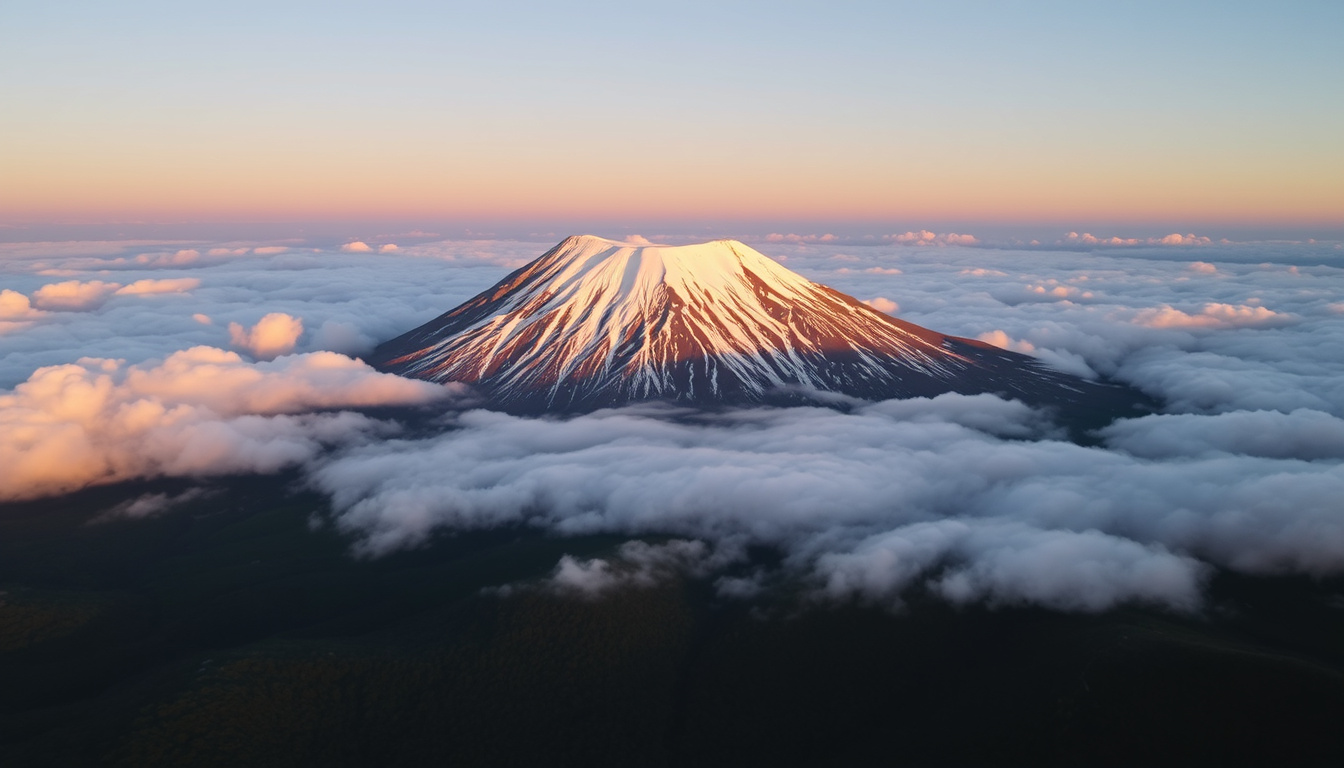
Mount Kilimanjaro rises 5,895 meters (19,341 feet) above the plains of northeastern Tanzania, making it the highest mountain in Africa and the tallest free-standing mountain on Earth. Unlike peaks that belong to a mountain range, Kilimanjaro stands alone—a massive dormant stratovolcano that draws over 35,000 climbers each year. While the summit, known as Uhuru Peak, is far lower than Mount Everest’s 8,848 meters, it is roughly 500 meters higher than the highest point reached on the Everest Base Camp trek.
Kilimanjaro sits near the Kenyan border in East Africa, at coordinates 3°04′S 37°21′E. It is a dormant stratovolcano with three cones: Kibo, Mawenzi, and Shira. The last major volcanic activity occurred an estimated 150,000 to 200,000 years ago. Its height was most recently confirmed in the 2008–2009 survey at 5,895 meters above sea level.
The mountain is protected within Kilimanjaro National Park, a UNESCO World Heritage Site designated in 1987. For anyone planning a trek, understanding the height, location, cost, and difficulty of the climb is essential. This article covers those questions with verified facts from official bodies and experienced operators.
Where Is Mount Kilimanjaro and How Tall Is It?
Key Insights About the Mountain
- Kilimanjaro is considered a “walk-up” mountain — no technical climbing required, but altitude is the primary challenge.
- Costs vary widely: budget $2,000–$6,000 depending on route, operator, and number of days.
- The summit success rate drops to roughly 50% on shorter 5-day itineraries; 8–9 day treks see rates above 85%.
- Kilimanjaro’s glaciers have shrunk by more than 80% since the early 20th century and may disappear between 2040 and 2060.
- More than 35,000 people attempt the climb annually, making it one of the most popular high-altitude treks worldwide.
- All trekkers must use a licensed tour operator; independent climbing is not permitted by Tanzanian authorities.
Snapshot Facts
| Attribute | Detail |
|---|---|
| Height (summit) | 5,895 m / 19,341 ft (Uhuru Peak) |
| First Ascent | 1889 (Hans Meyer, Ludwig Purtscheller) |
| Country | Tanzania |
| Mountain Range | None (free-standing) |
| Coordinates | 3°04′S 37°21′E |
| Volcano Status | Dormant (last activity ~150,000–200,000 years ago) |
| Climbing Season | Best: June–October & December–March |
Kilimanjaro is a dormant stratovolcano in Tanzania, East Africa, while Everest Base Camp is a trek on the Nepal–China border in the Himalayas. The height difference between Kilimanjaro and the Everest Base Camp trek’s highest point is significant: Kilimanjaro’s summit is about 500 meters higher than the 5,364 meters reached at EBC, though it is far lower than Everest’s summit at 8,848.86 meters.
How Much Does It Cost to Climb Kilimanjaro and How Long Does It Take?
The cost of climbing Kilimanjaro ranges from roughly $2,000 to $6,000 per person. Park fees account for about 35% of the total. Flights to Tanzania add $800 to $1,500, gear rental costs between $500 and $1,550, and tips for guides and porters run $250 to $400. These figures come from multiple operators and reflect 2025 pricing.
In comparison, the Everest Base Camp trek typically costs $1,500–$5,000, with some budget options as low as $1,000–$1,500 for basic arrangements. Summit expeditions on Mount Everest, by contrast, start at $30,000 and can exceed $100,000. Despite taking less time than EBC, Kilimanjaro is generally about twice as expensive, largely due to higher park fees and gear costs.
Climbing Routes and Duration
Six official routes approach Kilimanjaro from different directions. Two start from the west (Lemosho, Shira), three from the south (Machame, Marangu, Rongai), and one from the north (Northern Circuit). All routes have designated camping zones and range from 5 to 9 days, covering total distances of 60 to 75 kilometers.
- Most popular: Machame — considered the best balance of difficulty and scenery.
- Only route with lodging: Marangu — features tented cabins rather than lodges.
- Longest and most scenic: Northern Circuit — 9 days, with the highest summit success rate.
Kilimanjaro is generally twice as expensive as the Everest Base Camp trek despite taking less time. The primary driver is park fees, which make up roughly 35% of the total cost. Additional expenses include international flights, gear, and tips. Budget-conscious trekkers should factor in all components when planning.
Success Rates by Route Duration
The overall average summit success rate on Kilimanjaro is around 65%. However, this figure varies significantly by itinerary length. Shorter 5-day routes see success rates as low as 50%, while 8- to 9-day itineraries, such as the Northern Circuit or longer Lemosho variations, achieve rates above 85%. The main variable is acclimatization time: more days on the mountain allow the body to adjust to altitude gradually.
Is Kilimanjaro Harder Than Everest? Comparing Africa’s Tallest Peak
This is one of the most frequently asked questions among trekkers weighing the two iconic destinations. The short answer is that neither requires technical climbing skills — both are trekking routes. But the challenges differ in important ways.
Technical Skill Requirements
No technical climbing ability is needed for either Kilimanjaro or Everest Base Camp. Both are non-technical treks. Beginners can climb Kilimanjaro with good fitness, mental preparation, and proper acclimatization. Climbing Kilimanjaro is accessible to anyone in reasonable physical condition who prepares adequately.
Altitude Sickness Risk
Kilimanjaro presents a higher risk of altitude sickness because of its rapid elevation gain — roughly 3,600 meters over 5 to 9 days, depending on the route. The Everest Base Camp trek, by comparison, gains about 2,500 meters over 12 to 14 days, offering more time for acclimatization. This makes Kilimanjaro more dangerous in terms of altitude-related illness, even though the absolute elevation is lower than Everest’s summit.
Kilimanjaro is considered more dangerous than the Everest Base Camp trek due to the rapid ascent profile. Trekkers gain over 3,600 meters in as few as 5 days, increasing the risk of acute mountain sickness. Proper acclimatization scheduling — choosing longer routes — is the most effective mitigation strategy.
Duration and Physical Demands
The EBC trek is longer (12–14 days versus 5–9 days) and exposes trekkers to colder temperatures, particularly with wind chill. Kilimanjaro’s summit night sees temperatures of -10°C to -15°C, while EBC can experience -15°C to -25°C with wind chill. The longer duration of EBC makes it more physically demanding in terms of sustained effort, though the daily altitude gains are less aggressive.
In terms of comparison with other African peaks, Kilimanjaro is significantly taller than Mount Kenya, which stands at 5,199 meters. Both require good fitness, but Kilimanjaro is generally considered slightly easier technically due to its less steep terrain on the standard routes.
What Is the Best Time to Climb Kilimanjaro? Weather and Season Guide
Kilimanjaro’s weather is influenced by its equatorial location and five distinct climate zones, ranging from tropical rainforest at the base to arctic conditions at the summit. The mountain is climbable year-round, but conditions vary significantly by season.
Dry Seasons (Best for Climbing)
The two main dry periods are January to March and June to October. These months offer the most stable weather, clearer skies, and the highest likelihood of summit success. January through March tends to be colder at the summit but has fewer crowds. June through October is the busiest period, with the most favorable balance of temperature and precipitation.
Wet Seasons (Should Be Avoided)
The long rains from April to May and the short rains from November to December bring heavy precipitation, especially on the lower slopes. Trails become slippery, cloud cover obscures views, and summit success rates tend to drop. Most experienced operators advise against planning a climb during these months.
The best time to climb Kilimanjaro is during the dry seasons: January–March and June–October. January–March offers colder summit temperatures but fewer crowds. June–October is busier but provides the most reliable weather overall. Avoid April–May and November–December when rain is heaviest.
Summit Night Temperatures
Summit night on Kilimanjaro typically sees temperatures between -10°C and -15°C (14°F to 5°F). This is cold but manageable with proper gear. The mountain’s weather is notoriously unpredictable, and conditions can change rapidly even during the dry seasons.
By comparison, Everest Base Camp experiences colder temperatures overall, with summit night temperatures ranging from -15°C to -25°C when wind chill is factored in. Kilimanjaro’s weather is generally milder, though trekkers should still prepare for significant cold at high elevations.
Kilimanjaro: Key Events Timeline
- ~2–3 million years ago: Volcanic activity forms Kilimanjaro.
- 1889: First recorded ascent by Hans Meyer and Ludwig Purtscheller.
- 1912: First measurement of glacial extent records over 12 km² of ice.
- 1921: Kilimanjaro designated a forest reserve.
- 1973: Declared a national park (Kilimanjaro National Park).
- 1987: Designated a UNESCO World Heritage Site.
- 2019: Glacier area measured at less than 2 km².
- 2025–present: Ongoing studies of glacial recession; debate over the timeline for peak ice disappearance continues.
What Is Known and What Remains Uncertain
| Established Information | Information That Remains Unclear |
|---|---|
| Kilimanjaro is the highest mountain in Africa and located in Tanzania. | The exact year of glacial disappearance is debated, with estimates ranging from 2030 to 2060. |
| Its height is well-established at 5,895 m (19,341 ft) as measured in 2008–2009. | Future trekking success rates may shift with weather pattern changes due to climate change. |
| It is a dormant stratovolcano with no historical eruptions. | Annual cost fluctuations occur due to Tanzania park fee changes and operator pricing adjustments. |
Understanding Kilimanjaro’s Global Significance
Mount Kilimanjaro remains one of the world’s most sought-after trekking destinations, drawing over 35,000 climbers annually. Its appeal lies in the combination of non-technical terrain, dramatic ecological zones — from rainforest to arctic summit — and accessibility for fit beginners. However, altitude sickness, cost, and operator reliability are recurring challenges for trekkers.
The mountain is not just a trekking destination. Its glaciers serve as a critical indicator of climate change. Since 1912, when the ice cover was first measured at more than 12 km², the glaciers have receded to less than 2 km² — a loss of more than 80%. Scientists continue to study the rate of retreat, and the mountain holds UNESCO World Heritage status partly because of its exceptional natural beauty and ecological significance.
For those considering the climb, the choice of route and operator matters greatly. The Climbing Kilimanjaro resource offers detailed itineraries and pricing comparisons. Understanding how Kilimanjaro stacks up against other adventures, such as the detailed Kilimanjaro vs Everest breakdown, helps trekkers set realistic expectations.
Sources and Authority on Kilimanjaro
The information in this article draws from official and authoritative sources. The Tanzania National Parks authority (TANAPA) governs park fees and climbing regulations. The UNESCO World Heritage Centre provides documentation on the mountain’s heritage status and conservation challenges. Scientific data on glacier recession comes from the NASA Earth Observatory and the US Geological Survey. Historical records of the first ascent are preserved in the archives of the Royal Geographical Society. Statistical data on climber numbers and success rates are drawn from Kilimanjaro National Park annual climb reports.
Kilimanjaro is more dangerous due to rapid ascent and high risk of altitude sickness, while EBC is more physically demanding due to duration and cold.
— Analysis from multiple trekking operators and altitude medicine specialists
For cross-checking factual data, sources such as the Encyclopaedia Britannica and official Tanzanian government publications were consulted. The external links provided throughout this article lead to the original materials for readers who wish to verify specific claims.
Summary: Key Takeaways About Mount Kilimanjaro
Mount Kilimanjaro stands at 5,895 meters in Tanzania, making it Africa’s highest peak and the world’s tallest free-standing mountain. Climbing costs range from $2,000 to $6,000, with 5 to 9 days needed depending on the route. No technical skills are required, but altitude sickness poses a real risk. The best climbing windows are January–March and June–October. When comparing Kilimanjaro vs Everest Base Camp, Kilimanjaro is shorter in duration but more expensive per day and presents a higher altitude-sickness risk due to faster elevation gain. The mountain’s glaciers are retreating rapidly, and the exact timeline for their disappearance remains uncertain.
Frequently Asked Questions About Mount Kilimanjaro
Do I need a guide to climb Kilimanjaro?
Yes, independent climbing is not allowed. All trekkers must use a licensed tour operator.
What is the success rate for climbing Kilimanjaro?
Overall average is around 65%, but it ranges from ~50% on 5-day routes to over 85% on 8–9 day routes.
Can beginners climb Kilimanjaro?
Yes, no technical climbing skills are required. Good fitness, mental preparation, and proper acclimatization are key.
Is Kilimanjaro a volcano?
Yes, it is a dormant stratovolcano. The highest cone (Kibo) is dormant; the last major eruption was over 150,000 years ago.
How does Kilimanjaro compare to Mount Kenya?
Kilimanjaro is significantly taller (5,895m vs 5,199m) and considered slightly easier technically, but both require good fitness.
What is the altitude of Kilimanjaro’s summit?
Uhuru Peak, the highest point on Kilimanjaro, stands at 5,895 meters (19,341 feet) above sea level.
Which country is Mount Kilimanjaro located in?
Mount Kilimanjaro is located in Tanzania, East Africa, near the border with Kenya.
How many climbing routes are there on Kilimanjaro?
There are six official routes: Machame, Marangu, Lemosho, Shira, Rongai, and the Northern Circuit.
What is the best time of year to climb Kilimanjaro?
The dry seasons from January to March and June to October offer the most favorable weather conditions.
Are Kilimanjaro’s glaciers disappearing?
Yes, the glaciers have shrunk by more than 80% since 1912, and scientists estimate they may disappear between 2030 and 2060.
Related stories




Leon Carter is Celebrity & Royals Editor at StoryNative.uk, covering celebrity news, royal coverage and entertainment personalities.