
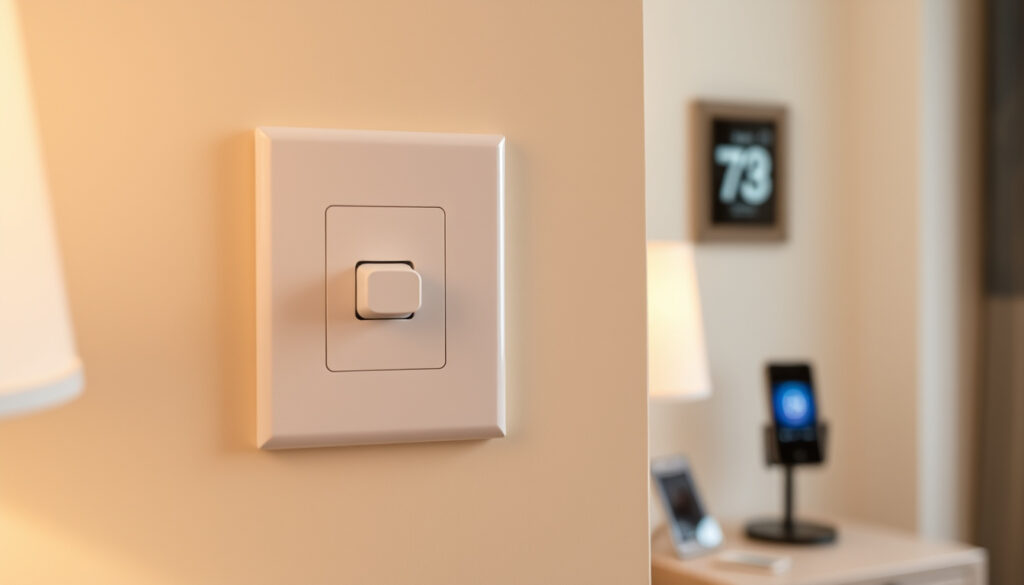
Choosing a light switch in the UK might seem straightforward, but the options available in 2025 extend far beyond simple white plastic toggles. From traditional rocker switches to sophisticated smart home devices, understanding the differences in wiring, functionality, and aesthetics is essential for making the right purchase. This guide covers the key types, UK wiring considerations, top retailers, and what to expect from modern switches.
The most important decision when buying a light switch today depends on your home’s existing wiring. Older UK properties often lack a neutral wire, which can restrict compatibility with many modern smart switches. Identifying your wiring type and back box depth before shopping is critical, as a 35mm deep back box is often required for smart switches.
Once you know your wiring setup, the choice comes down to style, function, and budget. Whether you are looking for a simple replacement or planning a full home automation system, this guide provides the facts you need to decide.
What types of light switches are available in the UK?
Top Light Switch Types at a Glance
Traditional two-way switch, widely available in white and other colours.
Use case: Basic on/off control
Flat wide paddle, popular in modern interiors.
Use case: Contemporary décor
Adjustable brightness, various styles.
Use case: Ambient lighting control
WiFi/Zigbee connected, app or voice control.
Use case: Home automation & energy saving
Understanding the landscape of available switches is the first step. Most UK homes still use white plastic rocker switches, but metal and coloured finishes are a rising trend.
- Most UK homes still use white plastic rocker switches, but metal and coloured finishes are trending.
- Wiring a light switch is a straightforward DIY job if you follow safety precautions, but must comply with BS 7671.
- Screwfix and B&Q offer the widest range of trade and domestic switches; Amazon has more smart and budget options.
- Adding a dimmer or smart switch can increase home value and energy efficiency.
- Dimmer switches are best for living rooms and mood lighting, costing between £10 and £50.
- Smart switches, which connect via Wi-Fi or Zigbee, range from £20 to £100 and support home automation.
- Double pole switches cut both live and neutral wires for complete safety, useful for appliances.
| Fast Facts: UK Light Switches | Value |
|---|---|
| Standard voltage | 230V AC, 50Hz |
| Common plate size | 86mm x 86mm |
| Wiring convention | Brown (live), Blue (neutral), Green/Yellow (earth) |
| Typical price range | £3 – £50 per switch |
| Popular brands | MK, Crabtree, Schneider, Varilight, LightwaveRF |
Rocker switches, with their flat paddle design, are a standard choice for modern interiors and typically cost between £2 and £15. Toggle switches offer a more traditional, classic look, often found in older installations and costing £1 to £8. For mood lighting, a dimmer switch—usually with a rotating knob—is a popular option.
Specialised types also exist. A 3-way switch controls one light from two locations, ideal for hallways and staircases, while a 4-way switch works for three or more locations in large rooms. Gang switches combine multiple switches on one faceplate, and mesh or grid switches are used in modular commercial setups, as noted by Screwfix and Ironmongery Direct. UK Light Switch Buying Guide
How to wire a light switch in the UK?
Wiring a light switch in the UK follows a standard colour convention and must comply with BS 7671 regulations. The live wire is brown (or red in older homes), the neutral is blue (or black), and the earth is green and yellow. For a single switch, the live wire connects to the common terminal, and the switched live returns to the light fitting.
Light switch wiring
Before touching any wiring, you must isolate the circuit at the consumer unit by switching off the relevant breaker. Using a voltage tester to confirm the power is off is a critical safety step recommended by consumer body Which? The wiring inside the back box will reveal if a neutral wire is present, which is crucial for smart switch compatibility.
Many wired smart switches, such as those using the Matter standard, require a neutral wire at the switch location. If your home has older wiring without a neutral, you must use a no-neutral smart switch (often Zigbee-based) or a battery/wireless module like Shelly, as advised by Smarthomeassistant.co.uk.
Is it safe to wire a light switch yourself in the UK?
Replacing a like-for-like light switch in England, Wales, and Scotland is considered non-notifiable minor electrical work under Part P of the Building Regulations. A competent DIYer can perform this task without notifying the local authority. However, any work involving new circuits, consumer unit changes, or electrical work in bathroom or kitchen zones must be carried out or certified by a registered electrician, according to regulations. If there is any doubt, calling a registered electrician is the safest course of action, a point echoed by Mike Lunn from Electrical Safety First.
Always isolate the circuit at the consumer unit before touching any wiring. Failure to do so can lead to serious electric shock or damage to the switch. Using a voltage detector to confirm the circuit is dead is a necessary precaution.
Where to buy light switches: Screwfix, Amazon, and other UK retailers?
The UK market offers several reliable retailers for light switches, each with distinct advantages. Screwfix provides a comprehensive range of trade and domestic switches, including grid and standard options, supported by an online guide. Smart Light Switches for UK Homes
Amazon UK is a major source for smart and budget switches, though prices can sometimes be £5 to £10 higher than from specialist distributors. For designer and traditional styles, Ironmongery Direct offers a focus on toggle, rocker, and gang switches. Specialist smart home distributors like Vesternet ship brands such as Shelly to the UK within 3 to 5 days.
Other notable retailers include Kent Traders, which provides detailed buying guides covering IP ratings and compatibility, and LEDsone, which specialises in high-end aesthetic options for 2026. If you need professional installation, HomeServe notes that replacement costs typically range from £35 to £55.
How to choose a light switch for your home?
Selecting the right light switch involves assessing your home’s wiring, your preferred style, and the required functionality. The first and most critical step is identifying whether you have a neutral wire. This is often missing in older UK homes and is required for most wired smart switches, including those using the Matter protocol.
Light Switch White
White is the most common material for light switches, but metal-clad and screwless designer options are increasingly popular for modern interiors, according to Ironmongery Direct and LEDsone. The choice of material affects both aesthetics and practicality; for example, chrome switches show fingerprints, while matte finishes are more forgiving in busy areas.
Consider the IP (Ingress Protection) rating for specific rooms. Bathrooms require switches with an IP44+ rating, while outdoor installations need IP65+ to protect against water ingress, as detailed by Kent Traders. For dimmer switches, ensure they are rated for LED bulbs and check the minimum load (typically 3W to 10W) to avoid flickering or ghost glow.
Evolution of UK Light Switches (Simplified)
- Pre-1960s: Round bakelite toggle switches with cloth wiring were the standard.
- 1960s-1990s: White plastic rocker switches became the dominant type in UK homes.
- 2000s: Metal plates, including brushed steel and brass, gained popularity for their modern look.
- 2010s: Smart WiFi switches and dimmers emerged, offering app and voice control.
- 2025: A wide range of decorative, modular, and smart switch options is now available.
Clarity vs. Common Confusion
| Established Information | Information That Remains Unclear |
|---|---|
| All UK light switches must be CE or UKCA marked. | Compatibility of smart switches with existing wiring (neutral needed) can be confusing. |
| Wiring colours are standardised (brown, blue, green/yellow). | Whether a dimmer switch works with all bulb types (only dimmable LEDs) is often misunderstood. |
| Turning off mains supply before work is mandatory. | The actual difference in quality between budget and premium brands can be hard to gauge. |
Market Context & Buying Considerations
UK regulations, specifically Part P of the Building Regulations, govern electrical work in homes. While some installations require a certified electrician, like-for-like switch replacements can be done by a competent DIYer. Style trends are shifting towards flat-plated and screwless switches for minimalist interiors, offering a cleaner look.
Investing in good-quality switches can improve both a home’s aesthetics and its resale value. Furthermore, with the rise of smart home integration, many modern switches now work with Alexa, Google Home, and Apple HomeKit, allowing for enhanced control and automation.
Expert Quotes & Authoritative Sources
The authoritative standard for electrical installations in the UK.
IET Wiring Regulations (BS 7671)
Recommend switching off at mains, testing with a voltage detector before touching wires.
Which? (Consumer body)
If in any doubt, call a registered electrician.
Mike Lunn, Electrical Safety First
What’s Next: Light Switches in 2026
The future of light switches in the UK points towards greater adoption of the Matter smart home standard, which aims to improve device interoperability. Manufacturers are also exploring more sustainable materials, including recycled plastics and bamboo. Expect to see integrated USB-C charging ports in wall switches and the emergence of wireless kinetic switches that require no batteries.
Frequently Asked Questions
Can I use a 2-way switch for 1-way?
Yes, a 2-way switch can be used as a 1-way by simply not connecting the extra terminal.
What does ‘plate width’ mean?
Plate width refers to the visible face size; standard is 86mm but slim and large plates are available.
Are chrome switches easy to clean?
Yes, but they show fingerprints; matt finishes are better for busy areas.
Do smart switches require a neutral wire?
Many do, though some work without (use a bypass capacitor – check compatibility).
What IP rating is needed for a bathroom?
Bathrooms require switches with an IP44+ rating.
Can a dimmer switch work with any LED bulb?
No, it only works with dimmable LEDs.
Is replacing a light switch notifiable work?
No, like-for-like replacement is non-notifiable under Part P.
What is the standard voltage in the UK?
The standard voltage is 230V AC, 50Hz.
Related stories





Vanessa Cole is Editor-in-Chief at StoryNative.uk, overseeing editorial policy, corrections, standards, celebrity privacy and publication decisions.