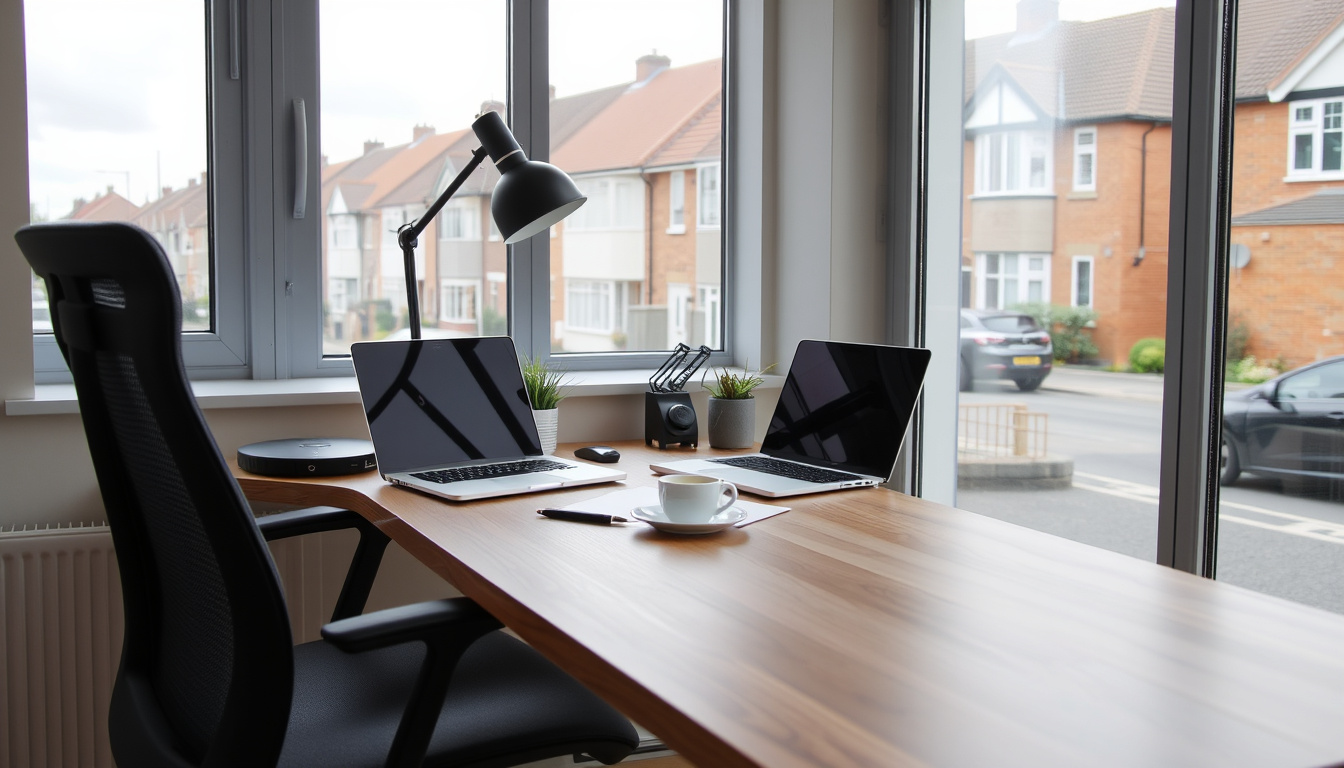

Choosing a home office desk has become a more deliberate process than it once was. With more people working from spare bedrooms, living rooms, and dedicated studies, the desk has moved from a simple piece of furniture to a central tool for productivity and well-being. The right choice depends on room dimensions, the number of monitors you use, and how much you are willing to invest. For most UK homes, a desk between 120 and 140 centimetres wide, priced between £350 and £1,000, offers the best balance of space, durability, and long-term value.
The market now offers everything from budget laminate tops to solid oak standing desks, and the variety can be overwhelming. Buyers often underestimate how much depth they need or how much clearance a chair requires. Understanding the basics of size, material, and storage before shopping can save both money and frustration.
Which Office Desk Is Best for Your Home?
Best Overall Home Office Desk
Recommendation based on material, size options, storage, and price. Links to top products from UK retailers.
Best Small Office Desk for Compact Spaces
Curated picks of small desks (under 120cm width) that maximise workspace without crowding. Includes IKEA, Argos, John Lewis options.
Best Office Desk with Drawers
Desks that combine work surface with built-in storage – for home offices that need organisation. Price and quality range.
Best Value Office Desk in the UK
Balancing cost and durability. Includes budget models under £100 and mid-range bestsellers.
- Home office desk sales have surged post-pandemic, with demand for compact and versatile designs growing.
- Height-adjustable standing desks are becoming mainstream, even in budget ranges.
- Many users prioritise cable management and storage over pure aesthetics.
- The most popular desk size in the UK for home use is 120–140 cm wide, with a depth of 60–70 cm.
- IKEA’s BEKANT and MALM lines remain top sellers, but specialist retailers offer better warranty terms.
- Buyers often underestimate the importance of desk depth – many standard desks are too shallow for dual monitors.
- Assembly difficulty is a key pain point; pre-assembled delivery is highly valued.
| Category | Details |
|---|---|
| Average price range | £50 – £400 for home desks; premium models up to £1,000+ |
| Common sizes | 120x60cm (small), 140x70cm (standard), 160x80cm (large); height typically 72-75cm |
| Top materials | Melamine-coated MDF (budget), solid wood (premium), steel frame with wood top (modern) |
| Most popular styles | Rectangular, L-shaped, standing desk, computer desk with hutch |
| Key features requested | Drawers, cable management, adjustable height, durable surface, easy assembly |
What Size Office Desk Should You Choose?
Getting the dimensions right is the single most important step. Measure your wall space first, then match the desk to your equipment. A laptop-only setup needs far less surface than a dual-monitor workstation.
Standard Desk Dimensions and Height
Standard fixed desks have a height of 720 to 760 millimetres, which works for most people when paired with an adjustable office chair. For standing desks, the adjustability range should span from 65 to 125 centimetres to accommodate both sitting and standing positions. The depth of the desk matters just as much: 60 centimetres is the practical minimum, while 70 centimetres or more keeps your keyboard at a comfortable distance from the screen.
Choosing a Desk Size for a Small Room
For alcoves, corners, or living room setups, a desk between 80 and 100 centimetres wide with a depth of 50 to 60 centimetres is usually sufficient. These compact dimensions work well for a laptop and a notebook, but they leave little room for additional monitors. When space is tight, consider a wall-mounted or fold-down design to preserve floor area.
A single monitor plus a laptop fits comfortably on a desk that is 100 to 120 centimetres wide and 60 centimetres deep. This is the most common specification for standard spare bedrooms in the UK.
Desk Depth and Width for Dual Monitors
Anyone working with two monitors, a tablet, and paperwork should look for a desk at least 140 centimetres wide and 70 to 80 centimetres deep. This provides enough surface area to position monitors at a healthy arm’s length and reduces neck strain. A dedicated office or full-time remote setup benefits from these larger dimensions.
Space Planning Around Your Desk
Allow at least 70 to 80 centimetres behind the chair so you can push back comfortably without hitting the wall. This clearance is often overlooked and can make a small room feel cramped. If you are sharing a workspace, a partner desk of 140 centimetres or more in width with a depth of at least 70 centimetres gives both users adequate room.
Measure your wall width and subtract 80 centimetres for chair clearance before choosing a desk. A 140-centimetre desk needs a wall at least 220 centimetres wide to feel comfortable. Desktop thickness should be less than 70 millimetres if you plan to add drawers underneath, otherwise your chair may not fit properly.
Where to Buy Office Desks in the UK?
UK shoppers have a wide range of options, from budget-friendly flat-pack retailers to premium furniture specialists. Each retailer has distinct strengths depending on what you prioritise: price, convenience, durability, or design.
IKEA Office Desks – Range, Quality and Value
IKEA dominates the UK market for home office desks, particularly for small spaces and desks with drawers. Popular models include the Micke, which offers integrated storage at £49 to £79, and the Lagkapten and Alex combination for around £165. IKEA desks are made from engineered wood with melamine finishes and offer decent durability for home use. They are not built for heavy commercial use, but for the price, the value is solid.
Argos Office Desks – Affordable and Convenient
Argos provides a strong selection of budget desks and gaming setups, with prices typically between £25 and £200. The main advantage is click-and-collect convenience and fast delivery. For shoppers who need a desk quickly and do not want to wait for specialist delivery, Argos is a practical choice.
John Lewis Office Desks – Premium and Stylish
John Lewis stocks higher-end desks, including premium standing desks and desks with drawers, in the £200 to £800-plus range. The retailer is known for quality and durability, and many products come with guarantees. For buyers who want a desk that will last a decade or more, John Lewis is a reliable option.
Specialist Online Retailers for Office Furniture
Office Furniture Online and Office Furniture Direct focus specifically on ergonomic and height-adjustable desks. Office Furniture Online offers desks from £150 to £600, while Office Furniture Direct has clearance deals starting at £64. Furniture Village caters to style-focused buyers with designer options starting above £500.
How to Compare Office Desk Prices and Delivery
Shoppers spend more time researching office desks than any other furniture category, according to behavioural insights. Retailer return policies and delivery options heavily influence decisions. Many online buyers prefer click-and-collect for desks, while pre-assembled delivery is increasingly valued by those who want to avoid flat-pack assembly.
How Much Does a Home Office Desk Cost?
Prices vary widely, but the relationship between cost and quality is not always straightforward. A very cheap desk may need replacing within a year, while a premium model can last decades. Understanding what each price tier delivers helps you match your budget to your actual needs.
Budget-Friendly Office Desks Under £100
At the ultra-budget level, desks under £50 are available from IKEA, such as the Linnmon and Adils combination at £25, and the Micke at £49. These are basic laminate models with minimal durability. They work well for light use, temporary setups, or students, but they are not designed for daily full-time work.
Mid-Range Office Desks (£100-£300)
Between £200 and £500, you can expect solid acacia or mango wood from boutique makers, as well as better storage options from retailers like IKEA, Argos, and Office Furniture Direct. This tier offers a noticeable improvement in build quality and aesthetics. Many desks in this range include drawers or cable management features.
Premium Office Desks – When Is It Worth Spending More?
The £350 to £1,000 range is widely considered the sweet spot for a desk used daily over five years or more. At £650 to £1,000, oak and walnut options become available, with refined finishes and better joinery. Above £1,000, you enter the realm of handmade, heirloom-quality hardwoods from custom makers. The extra cost buys durability, appearance, and often a better warranty.
Finding the Best Value Desk for Your Needs
Price alone does not guarantee quality. Warranty terms and customer reviews matter more than the price tag. A desk that costs £400 but includes a ten-year warranty and solid wood construction is better value than a £600 desk with a one-year warranty and particleboard construction.
Under £50 gets you basic laminate with limited durability. £200–£500 delivers solid acacia or mango wood with good storage. £350–£1,000 is the best value for daily use over five years, offering oak or walnut options at the upper end. Above £1,000, you are paying for handmade craftsmanship and premium hardwoods.
Assembly fees, delivery charges, and return shipping can add significantly to the final price. Some retailers charge extra for pre-assembled delivery, which is worth the cost if you are not confident with flat-pack assembly. Always check the total cost before committing.
How Has the Home Office Desk Evolved in Recent Years?
- 2020 – Home office boom triggered by the pandemic; desk sales spike globally as millions of people begin working from home.
- 2022 – Standing desks gain mainstream popularity; ergonomic awareness increases significantly among remote workers.
- 2024 – Smart desks with built-in power integration, including wireless charging and cable channels, emerge as a new product category.
- 2025 – Sustainability and modular designs become key trends; adjustable standing desks become more affordable across all budget tiers.
What Is Certain and What Remains Unclear About Choosing a Desk?
| Established Information | Information That Remains Unclear |
|---|---|
| Standard desk height is 72–75 cm for most users. | Durability of budget desks varies significantly between brands and is hard to predict without long-term reviews. |
| Standing desks enable posture changes and reduce sedentary strain, but they are not necessary for everyone. | Assembly quality can affect how long a desk lasts; two identical models may have different lifespans depending on how they are put together. |
| Price does not guarantee quality; warranty terms and independent reviews are more reliable indicators. | Future trends, such as fully smart desks with integrated technology, remain speculative and have not yet been widely adopted. |
What Is the Context of the UK Home Office Desk Market?
The UK home office furniture market is mature but continues to grow slowly, driven by hybrid work patterns that show no sign of reversing. Online sales dominate the sector, and consumers are increasingly looking for value, durability, and quick delivery rather than just the lowest price. Behavioural data shows that shoppers spend more time researching desks than any other furniture category, and retailer return policies heavily influence final purchase decisions.
Ergonomics plays a critical role in this market. A poorly chosen desk can lead to back, neck, and wrist strain, especially for people who work full-time from home. Desk height and monitor placement are the two most important factors for long-term comfort. The British Office Furniture Manufacturers Association (BOFMA) sets standards for commercial-grade desks, but many home office desks do not carry these certifications, which means buyers need to rely on reviews and specifications.
Sustainability is becoming a more prominent factor. FSC-certified wood and environmentally friendly materials are increasingly requested by buyers, and retailers are responding with more transparent sourcing information. Modular designs that allow users to adapt their desk over time are also gaining traction.
Where Can You Find Reliable Information on Office Desks?
Independent testing and official manufacturer guidelines are the most trustworthy sources when evaluating desk quality. Consumer research organisations such as Which? provide independent stability and durability tests that are not available from retailers. Trade associations like BOFMA publish standards for commercial-grade furniture, which can serve as a benchmark for home buyers who want higher durability.
IKEA product descriptions and assembly instructions provide accurate dimensions and weight limits. Always cross-reference these with independent reviews before purchasing.
— Official manufacturer guidelines
Which? UK office desk reviews offer independent testing on stability and durability, covering aspects that retailer product pages rarely mention.
— Consumer research organisations
British Office Furniture Manufacturers Association (BOFMA) standards for commercial-grade desks provide a useful reference for buyers who want furniture that exceeds typical home-office quality.
— Trade associations
What Is the Final Verdict on Choosing an Office Desk?
The best desk for your home office is the one that fits your room, supports your equipment, and matches your budget over the long term. Measure your wall space, decide on the width based on your monitor count, add storage if you lack drawer space elsewhere, and target the £350 to £1,000 range for a desk that will last five years or more. For a deeper look at the options available, read the Best home office desks UK buying guide.
Frequently Asked Questions
Is an IKEA office desk good quality?
IKEA desks offer good value for money, especially in the mid-price range. They are made of engineered wood with melamine finish. Durability is decent for home use, but they may not withstand heavy commercial use. Models like BEKANT and MALM are popular.
Do office desks come assembled?
Most budget to mid-range desks are flat-pack and require self-assembly. Some retailers like John Lewis offer assembly services for an extra fee. High-end desks may come pre-assembled.
What is the standard height of an office desk?
The standard desk height is 72–75 cm. This is suitable for an average-height person with an office chair. Adjustable standing desks allow you to change height from around 65 cm to 125 cm.
What is the best office desk for dual monitors?
Look for a desk at least 140 cm wide and 60 cm deep to hold two monitors comfortably. A depth of 70 cm or more is better for arm’s-length viewing. Some models include monitor risers or cable management.
Are L-shaped desks good for home offices?
L-shaped desks are excellent for corner spaces and provide ample room for multiple screens and paperwork. They require a larger footprint but are space-efficient in the right room. Best for users who need a dedicated semi-enclosed workspace.
How do I choose an office desk for a small space?
Measure your room width and depth. Opt for a desk 80–120 cm wide and 50–60 cm deep. Consider wall-mounted or fold-down desks. A desk with a shelf above can save floor space. Avoid corner desks in very narrow rooms.
What is the difference between a home office desk and a commercial office desk?
Commercial desks are built to higher durability standards, using thicker materials and stronger joinery. They are often bulkier and more expensive. Home office desks prioritise aesthetics and space-saving with lighter construction.
Can I find a cheap office desk that is still good?
Yes, many retailers offer desks under £100 from brands like IKEA, Argos, and Office Furniture Direct. Focus on solid construction, such as a metal frame and thick MDF, and check positive reviews before buying.
Related stories




Vanessa Cole is Editor-in-Chief at StoryNative.uk, overseeing editorial policy, corrections, standards, celebrity privacy and publication decisions.