
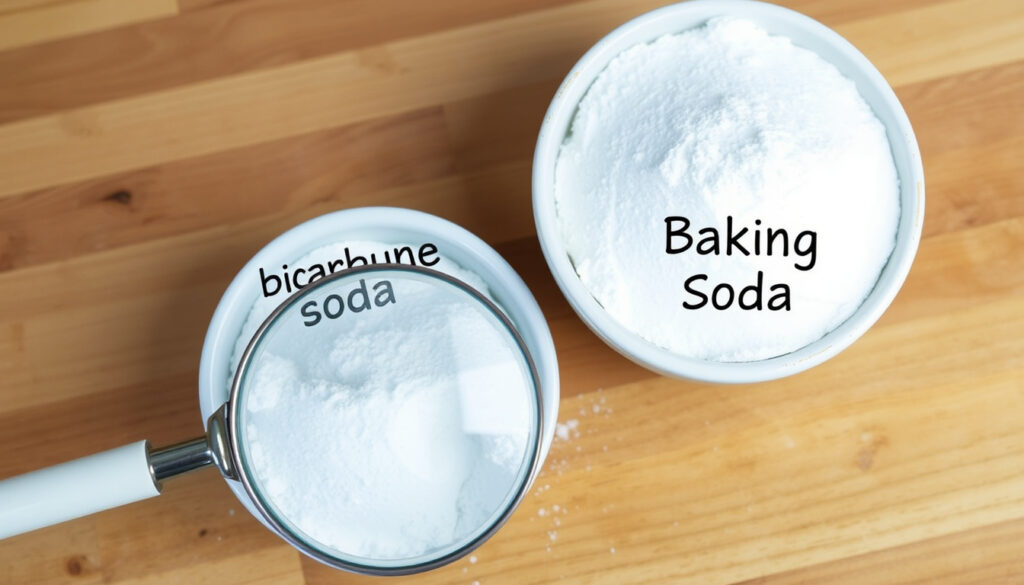
The white powder sitting in your kitchen cupboard goes by two common names depending on where you live. In the United Kingdom and much of the Commonwealth, it is called bicarbonate of soda. Across the Atlantic, the same substance is almost universally known as baking soda. Despite the different labels, they are chemically identical. This guide explains the relationship between bicarbonate of soda and baking soda, explores their uses in baking, cleaning, and skincare, and clarifies how they differ from baking powder.
Is Bicarbonate of Soda the Same as Baking Soda?
Yes. Bicarbonate of soda and baking soda are the exact same chemical compound: sodium bicarbonate (NaHCO₃). There is no functional or chemical difference between them. The distinction is purely regional. British and Commonwealth kitchens typically stock “bicarbonate of soda” or “bicarb,” while American recipes refer to “baking soda.” Both are pure sodium bicarbonate, a white crystalline powder that acts as a base.
Sodium Bicarbonate
Bicarb, Baking soda (US), Sodium hydrogen carbonate
Baking, cleaning, personal care
Bicarbonate of soda requires an acid to activate; baking powder already contains acid
- Bicarbonate of soda and baking soda are chemically identical – the name difference is purely regional (UK/Commonwealth vs US).
- Baking powder is a different product: it contains sodium bicarbonate plus an acid (cream of tartar).
- For cleaning and skincare, both terms refer to the same substance; only the label varies.
- Bicarbonate of soda is edible in small amounts used in baking, but consuming large quantities can be harmful.
- Sodium bicarbonate is the technical name; products labeled ‘baking soda’ or ‘bicarbonate of soda’ contain the same compound.
Why the Terminology Differs (UK vs US)
Historical usage patterns explain the split. The term “bicarbonate of soda” has been standard in British English for centuries, while American English adopted “baking soda” following the commercial success of Arm & Hammer in the 19th century. Both terms describe the same substance sourced from the same mineral deposits. Cooks in Australia and New Zealand also favour “bicarbonate of soda” or simply “bicarb.”
Chemical Identity: Sodium Bicarbonate
Sodium bicarbonate (NaHCO₃) is a salt composed of sodium ions and bicarbonate ions. It is a mild alkaline compound, which gives it its characteristic fizzing reaction when combined with an acid. This reaction releases carbon dioxide gas, making it useful as a leavening agent in baking. The PubChem compound summary confirms its structure and properties. The Royal Society of Chemistry also documents sodium hydrogen carbonate as a standard industrial and household chemical.
| Feature | Bicarbonate of Soda (UK) | Baking Soda (US) | Baking Powder |
|---|---|---|---|
| Chemical formula | NaHCO₃ | NaHCO₃ | NaHCO₃ + acid (e.g., cream of tartar) |
| Requires acid to activate | Yes | Yes | No (contains own acid) |
| Use in baking | Yes (with acidic ingredient) | Yes | Yes |
| Use in cleaning | Yes | Yes | Not recommended |
| Edibility | Yes in small amounts | Yes | Yes |
Bicarbonate of Soda vs Baking Powder: What’s the Difference?
This is one of the most common points of confusion in the kitchen. While bicarbonate of soda is pure sodium bicarbonate, baking powder is a pre-mixed leavening agent that contains sodium bicarbonate plus an acid (usually cream of tartar) and a starch to absorb moisture. The presence of the built-in acid means baking powder only needs water and heat to activate, whereas bicarbonate of soda requires an external acidic ingredient such as buttermilk, vinegar, or lemon juice.
How Baking Powder Is Different Chemically
The acid in baking powder reacts with the sodium bicarbonate when liquid is added, producing carbon dioxide bubbles. This self-contained system makes baking powder more convenient for recipes that do not include acidic components. However, baking powder is roughly three to four times weaker as a leavener than pure bicarbonate of soda. Using the wrong one can affect both texture and taste. Sources such as World of Spice and Arm & Hammer provide clear comparisons of their compositions and activation mechanisms.
Substitution Ratios and When to Use Each
Swapping one for the other is not straightforward. If a recipe calls for baking powder, using bicarbonate of soda requires reducing the quantity by three-quarters and adding extra acid. For example, one teaspoon of baking powder can be replaced by one-quarter teaspoon of bicarbonate of soda plus half a teaspoon of cream of tartar. Replacing bicarbonate of soda with baking powder requires tripling the amount, though the result may rise and fall too quickly and can taste bitter. The My Wellbeing Journal article explains these ratios in more detail.
“Baking soda and bicarb soda refer to the same thing. Australia, New Zealand and the UK use the term bicarb soda, while the US refers to it as baking soda.”
taste.com.au
“Bicarbonate of soda (also known as bicarb or baking soda) is a type of rising agent that’s used to achieve light and fluffy bakes.”
Dr. Oetker UK
How to Use Bicarbonate of Soda for Cleaning and Skincare
Beyond the kitchen, bicarbonate of soda is valued as a versatile household cleaner and personal care ingredient. Its mildly abrasive texture and alkalinity help break down grease, neutralise odours, and lift stains without the toxicity of many commercial products. Healthline outlines several effective applications.
Natural Cleaning Recipes with Bicarbonate of Soda
Mixed with vinegar or lemon juice, sodium bicarbonate creates a fizzing reaction that helps loosen dirt and kill mould. A simple paste of equal parts bicarbonate and water works on oven surfaces, stovetops, and sinks. Sprinkling it directly onto tiles or toilet bowls before scrubbing provides gentle abrasion. For laundry, adding half a cup to the wash cycle acts as a natural deodoriser and softener.
Skincare Uses: Face Masks and Exfoliation
Diluted bicarbonate of soda can be used as a gentle exfoliant or added to a lukewarm bath to soothe sunburn, bug bites, and dry skin. A 2017 study cited by Healthline noted that baking soda mouthwash raises saliva pH and may inhibit bacteria, though significant bacteria reduction was not observed. Skin reactions vary, and a patch test is recommended before wider use.
Mix bicarbonate of soda with a small amount of water to form a thick paste. Apply to greasy oven racks or stained mugs, let it sit for 15 minutes, then scrub. The mild abrasiveness lifts grime without scratching surfaces like commercial powders.
Bicarbonate of soda is generally safe for topical use, but its alkalinity can irritate sensitive skin. Avoid applying to broken skin or leaving on the face for extended periods. Rinse thoroughly after use and discontinue if irritation occurs.
Is Bicarbonate of Soda Edible? Safety and Culinary Uses
Yes, food-grade sodium bicarbonate is safe to eat in the small quantities typically used in baking. The FDA lists sodium bicarbonate as Generally Recognized as Safe (GRAS) for use in foods. Overuse, however, leads to a soapy or metallic taste due to incomplete chemical reaction. Consuming more than one or two teaspoons at once can cause nausea, bloating, and electrolyte imbalance. WebMD notes that while sodium bicarbonate is used medicinally for indigestion, evidence for other health claims such as improved athletic performance remains limited.
When to Use Baking Soda in Baking
Recipes that include acidic ingredients like buttermilk, yoghurt, cocoa, or brown sugar benefit from bicarbonate of soda because the acid activates the leavening. It also raises the pH of the batter, promoting browning through the Maillard reaction. For neutral recipes such as plain sugar cookies, baking powder is the better choice.
Health Considerations and Dosage
Medicinal use of sodium bicarbonate for heartburn should be occasional only. Regular high doses may cause alkalosis, gas, or sodium overload. People on low-sodium diets or with kidney issues should consult a doctor before consuming it. The European Food Safety Authority provides further information on safe levels in food products.
Keep bicarbonate of soda out of reach of pets and children. While small amounts in baked goods are safe, accidental ingestion of large quantities by pets can cause serious electrolyte imbalances. Always store it in a labelled container away from other powders.
How Did the Naming Confusion Develop Over Time?
- 1791 – French chemist Nicolas Leblanc produces sodium carbonate, the precursor to sodium bicarbonate, for industrial use.
- 1846 – Dr. Austin Church and John Dwight launch Arm & Hammer baking soda in the United States, popularising the term.
- Early 1900s – Bicarbonate of soda becomes a staple in British kitchens for both baking and household cleaning.
- 1970s – Baking powder gains widespread adoption as a convenient pre-mixed alternative to pure bicarbonate.
- Present – Cross-border recipes and social media amplify confusion over regional names, prompting continued questions about their identity.
What Is Certain and Uncertain About Bicarbonate of Soda and Baking Soda?
Several facts are well established, while some areas remain less clear. The table below separates confirmed information from points that require caution.
| Established Information | Information That Remains Unclear |
|---|---|
| Bicarbonate of soda and baking soda are chemically identical (sodium bicarbonate). | Some regions use ‘bicarbonate of soda’ as a generic term for both baking soda and baking powder – always check the ingredient list. |
| Baking powder is a different product containing sodium bicarbonate plus an acid. | Effectiveness for specific skin conditions varies individually; no robust clinical studies confirm cosmetic benefits. |
| Both can be used interchangeably in recipes calling for baking soda if the same mass is used. | Precise toxicity thresholds for large ingested doses are debated among medical sources. |
| Bicarbonate of soda is safe to eat in small amounts typical in baking. |
Why Does This Confusion Persist in Recipes and Online?
The confusion stems almost entirely from regional naming conventions. When British readers encounter an American recipe calling for baking soda, they may assume it is a different product. Likewise, American cooks faced with “bicarbonate of soda” may look for an unfamiliar ingredient. Social media amplifies this: users share questions like “Is bicarbonate of soda the same as baking powder in the UK?” without realising the answer depends on which product is actually in the container. Chemically, the answer is simple. Sodium bicarbonate is one molecule; the name on the box reflects local language, not different chemistry. Reading the label remains the most reliable way to confirm what you are buying.
What Do the Sources Say About Credibility and Expertise?
“Baking soda is much stronger than baking powder. Substituting baking powder for bicarb is not recommended.”
mywellbeingjournal.com
The sources used in this article range from manufacturer expertise (Arm & Hammer) to medical review platforms (WebMD) and evidence-based health sites (Healthline). The US National Library of Medicine’s household products database lists sodium bicarbonate as a common ingredient in cleaning and personal care items. The consensus across all authoritative sources is consistent: no chemical difference exists between baking soda and bicarbonate of soda, and baking powder is a distinct product. The Household Products Database provides further verification for those researching specific uses.
In Summary: Can You Use Baking Soda Instead of Bicarbonate of Soda?
Yes, they are the same substance. Use the same weight or volume in any recipe. For cleaning and skincare, both terms point to the same powder. The only trap is mistaking either one for baking powder, which behaves differently and requires careful substitution. If you are baking, Meat and Potato Pie – Authentic Lancashire Recipe Guide offers a traditional dish where knowing the difference matters.
Frequently Asked Questions
Can I use bicarbonate of soda for laundry?
Yes, it can be used as a natural deodoriser and softener. Add 1/2 cup to the wash cycle.
What is the pH of bicarbonate of soda?
In solution, it is slightly alkaline with a pH around 8.3.
Does bicarbonate of soda expire?
It does not expire but loses potency over time. Test by adding a bit of vinegar; if it fizzes vigorously, it’s still active.
Is baking soda the same as bicarbonate of soda for cooking?
Yes, they are identical. Use the same weight/volume as specified in your recipe.
What is the difference between bicarbonate of soda and baking powder?
Baking powder contains sodium bicarbonate plus an acid and a starch. Bicarbonate of soda is pure sodium bicarbonate and requires an acidic ingredient to activate.
Can I clean silver with bicarbonate of soda?
Yes, a paste of bicarbonate of soda and water or a foil method works well. See How to Clean Silver Jewelry – Baking Soda and Foil Methods for details.
Is sodium bicarbonate the same as baking soda?
Yes, sodium bicarbonate is the chemical name for both baking soda and bicarbonate of soda. They are all the same compound.
Can eating too much bicarbonate of soda be harmful?
Yes, large amounts can cause nausea, bloating, electrolyte imbalances, and alkalosis. Stick to small quantities used in recipes.
How should I store bicarbonate of soda?
Store in a cool, dry place in a sealed container. It absorbs moisture and odours, which can reduce its effectiveness over time.
Related stories





Isabelle Knight is TV & Streaming Editor at StoryNative.uk, covering television, streaming platforms, broadcast schedules and platform news.