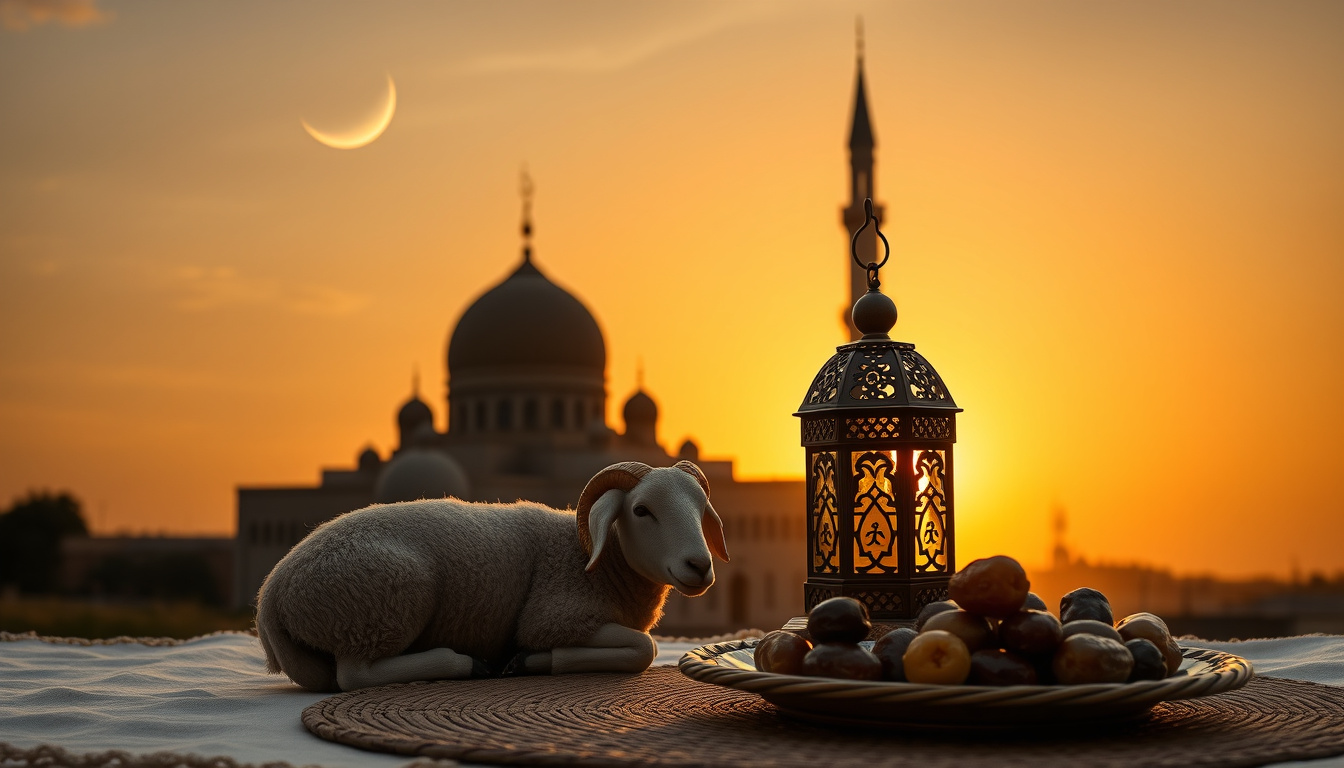

Eid ul-Adha, the Festival of Sacrifice, is one of the two most important celebrations in Islam. Observed by millions worldwide, it commemorates the profound faith of Prophet Ibrahim (Abraham) and his willingness to submit to Allah’s command. The festival, which also marks the climax of the annual Hajj pilgrimage, is a time for prayer, charity, family gatherings, and the distribution of meat to those in need. As the Islamic world prepares for Eid ul-Adha in 2025, understanding its meaning, dates, and traditions is essential for both Muslims and those wishing to share in the spirit of the occasion.
The festival’s name, Eid al-Adha, translates to the “Festival of the Sacrifice.” It falls on the 10th day of Dhul-Hijjah, the final month of the Islamic lunar calendar. The story at its heart comes from the Quran (Surah As-Saffat 37:100-111), recounting how Prophet Ibrahim was commanded in a dream to sacrifice his son, Ismail. As Ibrahim prepared to carry out the act, Allah provided a ram to be sacrificed instead, rewarding Ibrahim’s unwavering devotion. This narrative underscores themes of faith, submission, and divine mercy, as noted by sources like MuslimAid.
What is Eid ul-Adha and when is it in 2025?
The “Festival of Sacrifice” honoring Prophet Ibrahim’s devotion.
June 6, 2025
Willingness to give up something precious for Allah.
Four days (10th to 13th of Dhul-Hijjah)
- Eid ul-Adha is the second of the two main Islamic festivals, alongside Eid al-Fitr.
- It commemorates Prophet Ibrahim’s willingness to sacrifice his son, as recorded in the Quran.
- The festival coincides with the Hajj pilgrimage in Mecca.
- The main ritual is Qurbani, the sacrifice of an animal, with meat shared among family, friends, and the poor.
- Eid ul-Adha 2025 is expected to begin on the evening of Friday, June 6 and end on the evening of Tuesday, June 10, according to BBC Bitesize.
- Common greetings include “Eid Mubarak” and “Eid ul-Adha Mubarak.”
| Fact | Details |
|---|---|
| Name | Eid ul-Adha (also Eid al-Adha, Bakra Eid) |
| Significance | Commemorates Prophet Ibrahim’s test of faith |
| Date (2025) | Evening of June 6 – June 10 (based on lunar sighting) |
| Key practices | Prayer, sacrifice (Qurbani), charity, visiting family |
| Greeting phrase | Eid Mubarak, Eid ul-Adha Mubarak |
| Other Eids | Eid al-Fitr (end of Ramadan) – different date and meaning |
The narrative is a central pillar of the faith, emphasizing submission to God’s will above all else. This act of faith is re-enacted each year through the ritual of Qurbani, where an animal is sacrificed. The meat from the sacrifice is divided into three parts: one for the family, one for friends and neighbors, and one for the poor, reinforcing the festival’s deep connection to charity and community, as highlighted by the Hindustan Times.
How is Eid ul-Adha celebrated around the world?
The Core Rituals of the Day
Celebrations begin early in the morning with a special prayer, known as Eid Salah, performed in congregation at a mosque or an open prayer ground. This is followed by a Khutbah, a sermon delivered by the Imam. After prayers, the act of Qurbani—the animal sacrifice—is performed. The day is then spent visiting family and friends, exchanging gifts, and enjoying festive meals. The Hindustan Times notes the global variations, from the focus on community feasts in India, where it is often called Bakra Eid, to the emphasis on animal welfare and hygiene in other parts of the world.
The practice of Qurbani is a direct reenactment of Prophet Ibrahim’s sacrifice. It symbolizes a Muslim’s devotion and willingness to give up their most prized possessions for the sake of Allah. The distribution of meat ensures that everyone, regardless of their financial status, can partake in the celebration.
Feasting, Family, and Charity
Food is a central part of the celebration, with families preparing lavish meals that often include dishes like biryani and kebabs. The emphasis on charity, known as Sadaqah, is a key component. Muslims are encouraged to give to the less fortunate, ensuring they can also join in the festivities. The Takbir, a prayer chant meaning “Allahu Akbar” (God is Great), is recited from the Day of Arafah, the day before Eid, throughout the days of the festival, creating a spiritual atmosphere in communities worldwide.
The sacrifice requires animals to be treated with respect and compassion. Modern practices increasingly focus on animal welfare, hygiene, and ensuring the meat is handled and distributed correctly. Many organizations now offer services to perform Qurbani on your behalf in developing countries, ensuring the meat reaches the most vulnerable populations.
Eid ul-Adha Mubarak: Best Wishes, Greetings, and Images
Exchanging greetings is a cherished part of Eid, with people sharing heartfelt messages to convey joy and blessings. For those looking for the perfect words to send on Eid ul-Adha 2025, a wide range of options from general to thoughtful are available from sources like the Economic Times and Good Housekeeping.
General and Warm Greetings
- “Eid Mubarak! May your day be filled with joy and blessings.” (Economic Times)
- “Wishing you a peaceful and prosperous Eid!” (Economic Times)
- “May Allah accept your prayers and sacrifices.” (Economic Times, Good Housekeeping)
- “Eid Mubarak! May your sacrifices be appreciated and your prayers answered on this blessed day.” (Hindustan Times)
- “As you offer your prayers and sacrifices, may your devotion be accepted and your heart be filled with gratitude.” (Economic Times)
Wishes for Family and Friends
- “May Allah’s blessings always shine upon our family. Wishing you a joyful and peaceful Eid-ul-Adha!” (Economic Times)
- “Friends are the family we choose. Blessed to celebrate this Eid with you.” (Hindustan Times)
- “Wishing our family joy that multiplies and faith that never fades. Eid Mubarak!” (Hindustan Times)
Urdu Messages
For those wishing to send greetings in Urdu, resources are available. Dailymotion offers video greetings and animations with messages like “Happy Eid Mubarak Wishes in Urdu.” A popular poetic sentiment adaptable for Urdu shayari style is: “Celebrate this Eid by sacrificing pride, embracing humility, and spreading peace,” as noted by the Economic Times. Sharing an authentic Urdu animation can also add a special touch.
Finding Eid Mubarak Images
Visuals play a significant role in modern celebrations. The Hindustan Times offers “300+ Eid-al-Adha 2025 wishes, images, messages,” which can include AI-generated images of mosques and families. Dailymotion also features video greetings with HD images and Shayari. Many online sources suggest pairing text messages with festive images of feasts and prayers, as noted by the Times of India.
Eid al-Adha Hajj: What is the connection?
Eid ul-Adha is intrinsically linked to the Hajj, the annual pilgrimage to Mecca that every able-bodied Muslim who can afford it is required to undertake once in their lifetime. The festival marks the culmination of the pilgrimage. The Hajj begins on the 8th of Dhul-Hijjah, peaks on the 9th with the Day of Arafah (a day of standing and prayer), and Eid begins on the 10th, after pilgrims have returned from Mina. The rituals of Hajj, including the Tawaf (circumambulation of the Kaaba) and the stoning of the devil, all parallel elements of Prophet Ibrahim’s story. This connection makes the period a sacred time for the global Muslim community, or Ummah.
Eid ul-Adha vs Eid al-Fitr: What are the main differences?
While both are major Islamic festivals, they have very different significance and origins. The table below outlines the core distinctions between the two Eids.
| Aspect | Eid al-Adha (Festival of Sacrifice) | Eid al-Fitr (Festival of Breaking Fast) |
|---|---|---|
| Meaning | Commemorates Prophet Ibrahim’s sacrifice | Marks the end of Ramadan’s month-long fast |
| Key Nature | Sacrifice, charity, and Hajj | Gratitude, charity (Zakat al-Fitr), community |
| Main Ritual | Qurbani (animal sacrifice) and Eid prayer | Special Eid prayer and giving of charity (Zakat al-Fitr) |
| Timing | 10th of Dhul-Hijjah (after Hajj) | 1st of Shawwal (after Ramadan) |
Eid ul-Adha 2025 – Key Dates & Rituals
- Day before Eid (9th Dhu al-Hijjah) – The Day of Arafah, the climax of the Hajj pilgrimage. For non-pilgrims, it is a recommended day of fasting.
- Eid Day 1 (10th Dhu al-Hijjah) – The day of Eid prayer (Salah), Takbir, and the commencement of Qurbani (sacrifice) after the prayer.
- Eid Days 2-4 (11th-13th Dhu al-Hijjah) – Known as the Tashriq days. These are days for continuing the sacrifice, family visits, and feasting.
Certainty vs Uncertainty: How is the Eid date determined?
The exact start date of Eid ul-Adha depends on the lunar calendar and the official sighting of the new moon in each country. The dates given are astronomical estimates. This can lead to variations of ±1 day between countries or even within different regions. For instance, while Saudi Arabia and the UAE are expected to observe Eid on June 6, 2025, India is predicted to celebrate it on June 7, 2025, due to moon sighting variations. It is always best to check with local Islamic authorities for the confirmed date in your area.
| Established Information | Remains Uncertain |
|---|---|
| Eid ul-Adha falls on the 10th of Dhul-Hijjah. | The exact start date for a specific country cannot be confirmed until the moon is sighted. |
| Astronomical predictions place the start of the month in early June 2025. | Whether the date will be June 6 or June 7 for a given location. |
| The celebration lasts for four days. | Variations in the start day can shift the entire celebration window. |
Why does Eid ul-Adha matter beyond religious observance?
Eid ul-Adha serves as a powerful force for cultural unity and charitable giving. The act of Qurbani and the distribution of meat reinforces the principle of social responsibility, ensuring that the less fortunate are included in the joy of the festival. In the modern world, the festival has adapted to include digital greetings, virtual donations, and a growing conversation about eco-friendly and ethical Qurbani practices. It is a global event that strengthens the bonds of the Ummah, a community that transcends borders and cultures, as highlighted by sources like Dompet Dhuafa.
Quotes From Reputable Sources
“Eid ul-Adha is a public holiday in Muslim countries. In 2025, Eid ul-Adha will begin on the evening of Friday 6 June and end on the evening of Tuesday 10 June.”
– BBC Bitesize
“The celebration of Eid-ul-Adha is to commemorate Prophet Ibrahim’s devotion to Allah SWT and his readiness to sacrifice his son, Ismail.”
– MuslimAid
“Eid al-Adha is the second of the two main festivals in Islam, alongside Eid al-Fitr. It falls on the 10th of Dhu’l-Hijja.”
What is the overall significance of this year’s Eid?
Eid ul-Adha 2025 is a time for Muslims around the world to reflect on the themes of sacrifice, faith, and community. It represents a moment to connect with family and extend a hand of charity to the less fortunate. Whether you are celebrating by performing the Hajj, offering Qurbani, or simply sharing a greeting with a neighbor, the festival offers a chance to deepen one’s faith and reaffirm a commitment to the community.
Frequently Asked Questions
What does ‘Eid Mubarak’ mean?
‘Eid Mubarak’ is an Arabic greeting meaning ‘Blessed festival’ – a common phrase for both Eids.
Why is Eid ul-Adha called Bakra Eid?
In South Asia (Urdu/Hindi), ‘Bakra’ means goat (or sacrificial animal); the festival is often called Bakra Eid because of the animal sacrifice tradition.
How many days is Eid ul-Adha celebrated?
Eid ul-Adha lasts for four days (10th to 13th of Dhu al-Hijjah). The main celebrations are on the first day, but the sacrifice can be performed on any of the four days.
Can non-Muslims wish Eid Mubarak?
Yes, it is a respectful and friendly gesture to say ‘Eid Mubarak’ to Muslim friends, colleagues, or neighbors.
What is the Day of Arafah?
The Day of Arafah is the 9th of Dhul-Hijjah and the most important day of Hajj. Non-pilgrims are encouraged to fast on this day to atone for sins.
What are the Tashriq days?
The Tashriq days are the three days following Eid (11th-13th of Dhul-Hijjah). During this time, Muslims continue to perform Qurbani and recite special prayers.
Related stories





Adam Pryor is Managing Editor at StoryNative.uk, running the daily news list, the publishing schedule and newsroom workflow.