
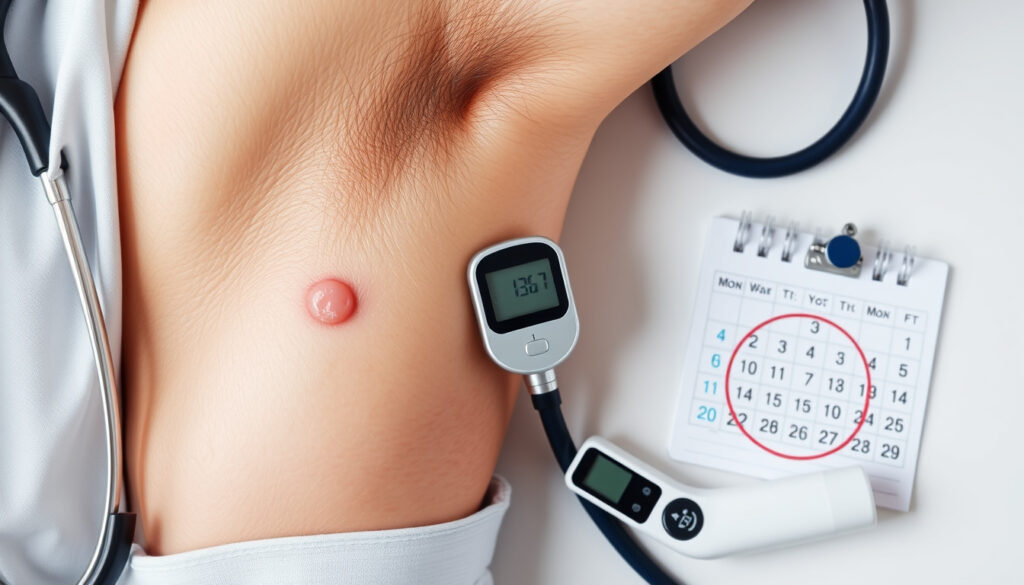
Swollen lymph nodes in the armpit, also known as axillary lymphadenopathy, occur when the body’s immune system responds to an infection, injury, or other trigger. The nodes, which normally measure less than 1 cm, can become tender and noticeable as lumps under the skin. In the vast majority of cases, the swelling resolves on its own within one to four weeks, particularly when linked to minor viral or bacterial infections. Reputable health organizations such as the Mayo Clinic, Cleveland Clinic, and Medical News Today emphasize that while most instances are benign, persistent or unusual swelling should be evaluated by a healthcare professional.
The armpit contains a cluster of lymph nodes that drain the arm, chest wall, and breast tissue. Because of this drainage pattern, swelling often reflects an issue in one of those areas. A tender node that appears alongside a cold or a skin irritation is usually a reassuring sign that the immune system is working. However, a painless, hard, or fixed node that persists for several weeks requires prompt medical attention.
Common causes include infections and injuries. Practical relief strategies focus on rest and warm compresses. Recovery timelines vary, and warning signs that warrant medical attention include hardness, fixation, or persistence beyond four weeks. The guidance below is drawn from leading health sources including the NHS, Mayo Clinic, and HealthDirect.
What Causes Enlarged Lymph Nodes Under the Armpit?
Enlarged lymph nodes under the arm are most often triggered by infection. More than 90 percent of cases are related to viral or bacterial illnesses that resolve without specific treatment. Understanding the cause helps determine whether home care is appropriate or if medical evaluation is needed.
Infection, injury, vaccine reaction, autoimmune conditions, rare cancer
Swelling, tenderness, redness, fever, night sweats
Warm compresses, rest, OTC pain relievers, avoid squeezing
Node larger than 1 cm, hard or fixed, painless, lasting more than 4 weeks, or with systemic symptoms
Key insights at a glance:
- Most swollen armpit lymph nodes are caused by infection (cold, flu, skin infections) and resolve on their own.
- Cancer (lymphoma, breast cancer metastasis) is rare, but warning signs include a firm, fixed, painless node that persists for weeks.
- Pregnancy can cause benign lymph node swelling due to hormonal changes and increased infection risk.
- Men may be more prone to lymph node swelling from skin infections, exercise-related injuries, or lymphoma.
- Painful nodes are usually a good sign (inflammation from infection); painless nodes deserve more attention.
- Vaccines, including those for COVID-19 and flu, can cause temporary axillary lymphadenopathy that fades within three to four weeks.
The table below summarizes the most common causes, their typical duration, key symptoms, and recommended action based on information from the Mayo Clinic, Medical News Today, and Healthline. For a comprehensive breakdown, see our guide on axillary lymphadenopathy causes and treatment.
| Cause | Duration | Key Symptoms | Action |
|---|---|---|---|
| Viral infection (e.g., cold, flu, mono) | Few days to 2 weeks; mono may last 2–4 weeks | Tender, soft, often paired with sore throat or fever | Rest, hydration, OTC pain relief |
| Bacterial infection (e.g., cellulitis, cat scratch) | 1–4 weeks with antibiotics | Red, warm, painful, possibly pus | Antibiotics from a doctor |
| Injury or vaccine reaction | Days to 3–4 weeks | Localized pain resolves as injury heals | Ice, rest, monitor |
| Autoimmune (e.g., lupus, rheumatoid arthritis) | Persistent | Often multiple nodes, fatigue, joint pain | Rheumatologist referral |
| Cancer (lymphoma, breast cancer metastasis) | Persistent more than 4 weeks | Firm, fixed, painless, night sweats, weight loss | Immediate medical evaluation |
How to Relieve Swollen Lymph Nodes in the Armpit
For most people, home care is sufficient while the immune system clears the underlying cause. The goal is to reduce discomfort and support recovery without irritating the area further.
Rest and avoid straining the arm
Resting the arm and shoulder on the affected side can help reduce lymphatic fluid buildup. Prioritizing sleep supports immune function and speeds resolution.
Apply warm or cold compresses
A warm compress (10 to 15 minutes, up to three times a day) improves circulation and relieves pain. An ice pack can be used instead if swelling is more prominent than pain. Alternate based on what feels most comfortable, as advised by WebMD and the Cleveland Clinic.
Stay hydrated and eat well
Drinking enough fluids and eating nutrient-rich foods, such as fruits and vegetables, supports the immune system during recovery.
Use over-the-counter pain relief
Acetaminophen (Tylenol) or ibuprofen (Advil) can reduce pain and inflammation. Aspirin should not be given to children or teenagers due to the risk of Reye’s syndrome.
Keep the area clean and avoid irritants
Use a gentle soap and avoid deodorants, antiperspirants, or tight clothing until the swelling subsides. If a skin infection is present, an antiseptic wash may help — do not attempt to pop any boils or lumps.
For pain or tenderness: apply a warm compress and take an OTC pain reliever. For swelling alone: use an ice pack and rest the arm. For itch or redness: switch to a mild soap and avoid known allergens. If signs of infection such as redness spreading, warmth, or pus appear, a doctor should evaluate for antibiotics or medicated creams.
Additional self-care strategies are available from the WebMD guide on swollen glands and the Cleveland Clinic’s symptom overview.
How Long Do Swollen Lymph Nodes in the Armpit Last?
The duration depends on the underlying cause. Most viral-related swelling improves within one to two weeks. Bacterial infections may require antibiotics and typically resolve within a few days to four weeks. Mononucleosis and other stubborn viruses can keep nodes enlarged for up to a month.
Typical timelines by cause
For a common cold, nodes often shrink as other symptoms fade, usually within a week. After a vaccine, swelling may appear within 24 to 48 hours and last up to three to four weeks. Autoimmune conditions can cause persistent swelling that fluctuates with disease activity.
When prolonged swelling needs attention
The HealthDirect Australia guide notes that a lump under the armpit that does not go away after two to three weeks should be checked by a doctor. If a node has not returned to normal after four weeks, or if it continues to grow, medical evaluation is recommended. A node that has remained stable in size for more than a year is often benign, but a doctor should still confirm this.
Swollen Lymph Nodes in Armpit and Cancer: When to Worry?
Cancer is a rare cause of swollen armpit lymph nodes, but it is the concern that causes the most anxiety. Understanding the features that distinguish benign from malignant swelling can help people make informed decisions about seeking care.
Features of a potentially malignant node
Cancerous lymph nodes are often described as hard or rubbery, fixed in place (they do not move when gently pushed), and painless. They tend to persist for more than four weeks and may grow progressively larger. Systemic symptoms such as unexplained fever, drenching night sweats, unintentional weight loss, or persistent fatigue can accompany malignancy.
Benign indicators
Painful nodes that are soft and mobile are almost always linked to infection or inflammation. Tenderness suggests the immune system is actively fighting a pathogen, which is a reassuring sign. Nodes that shrink within two weeks or remain unchanged for over a year are also likely benign.
Consult a healthcare provider without delay if a lymph node feels hard, rubbery, or fixed; if it is painless and growing; if it has not improved after three weeks; if multiple nodes are swollen in different areas (such as the neck and armpit); or if it is accompanied by fever, night sweats, unexplained weight loss, persistent cough, or fatigue. Early evaluation can rule out lymphoma or breast cancer metastasis — both of which are treatable when caught early.
Tests your doctor may order
If a node is suspicious, a physician may order blood work, an ultrasound, or a biopsy. These tests provide a definitive diagnosis. According to the CDC, imaging and tissue sampling are the standard approaches when malignancy is suspected.
It is important to keep the statistics in perspective. The Mayo Clinic notes that more than 75 percent of swollen lymph nodes resolve spontaneously without any treatment. Cancer accounts for a very small fraction of cases, especially when the swelling is accompanied by pain or tenderness. However, any node that meets the warning criteria should be evaluated to be safe.
Swollen Lymph Nodes in Armpit: Special Considerations for Pregnancy and Men
Certain populations have unique risk factors that influence how swollen armpit lymph nodes should be interpreted.
Swollen lymph nodes during pregnancy
Pregnancy causes hormonal changes that can affect lymphatic tissue. The immune system is also modulated during pregnancy, which may increase susceptibility to infections. Swollen nodes in the armpit during pregnancy are usually benign, but they should be monitored with the help of an obstetrician to rule out breast-related changes or infections such as mastitis.
Swollen lymph nodes in men
Men may experience swollen armpit lymph nodes from skin infections related to shaving, exercise-related injuries, or contact sports. Lymphoma risk is slightly higher in men than in women, so a persistent, painless node warrants evaluation. Swelling from a recent vaccination or arm injury is common and typically resolves without intervention.
What Is the Typical Timeline for Swollen Armpit Lymph Nodes?
Understanding how swelling progresses over time can help people decide whether their situation is following a normal course or requires medical input. The stages below are based on aggregated data from the Mayo Clinic, Healthline, and Medical News Today.
- Day 1–7: Swelling appears, often with tenderness. This is usually the peak of the immune response to an acute infection or injury.
- Day 8–14: If the cause is viral, the node begins to shrink as other symptoms improve. Bacterial infections may still be active if antibiotics have not yet taken full effect.
- Week 3–4: The node should be returning to its normal size. If it remains larger than 1 cm, a medical check is recommended.
- More than 4 weeks: Persistent swelling requires further investigation. Imaging and possibly a biopsy may be needed to rule out malignancy or chronic infection.
What Is Known and What Remains Unclear About Armpit Lymph Node Swelling?
Medical research has established several clear facts about swollen armpit lymph nodes, but some aspects remain uncertain and require individualized assessment.
| Established Information | Information That Remains Unclear |
|---|---|
| Most swollen armpit lymph nodes are caused by infection and are not cancer. | Without imaging or biopsy, it is not possible to fully rule out cancer in a persistent node. |
| Painful nodes are usually benign and linked to infection or inflammation. | A painless, hard, fixed node that persists requires further investigation to determine the cause. |
| A node smaller than 1 cm is generally considered normal. | Pregnancy-related swelling is usually benign, but limited research exists on specific risk markers in this population. |
| More than 75 percent of cases resolve spontaneously within two to four weeks. | The exact proportion of cases caused by specific autoimmune or hormonal triggers is not well quantified. |
What Do Swollen Armpit Lymph Nodes Mean for Your Body?
Lymph nodes are small, bean-shaped structures that act as filters for the lymphatic system. They trap and destroy pathogens and abnormal cells. When lymph nodes in the armpit swell, it usually indicates that the immune system has been activated in the region they drain — namely the arm, chest wall, and breast.
This anatomical connection explains why a breast infection or a cyst can cause swelling in the armpit on the same side. It also explains why recent vaccinations — particularly those injected into the deltoid muscle — can trigger temporary axillary lymphadenopathy. The swelling is a sign that the immune system is responding to the vaccine. Deodorant or antiperspirant is not a proven cause of lymph node swelling, although skin irritation from these products may contribute to a secondary reaction.
The Lattimore Physical Therapy guide notes that muscle strain in the arm or shoulder can also lead to localized swelling as part of the inflammatory response. In all cases, the body is communicating something — understanding that signal is the key to appropriate action.
What Do Expert Health Sources Recommend?
Leading health organizations consistently emphasize that swollen lymph nodes are usually benign but should not be ignored when certain features are present.
“Swollen glands are usually a sign of infection. They often get better on their own within 2 to 4 weeks.”
— NHS
“Swollen lymph nodes usually occur as a result of infection from bacteria or viruses. Rarely, swollen lymph nodes are caused by cancer.”
— Mayo Clinic
“Normal lymph nodes measure less than 1 cm.”
— HealthDirect
These quotes reflect the broad consensus: the vast majority of cases are infection-related and self-limited, but a small percentage require thorough investigation.
What Should You Do About Swollen Lymph Nodes in Your Armpit?
For most people, a swollen lymph node in the armpit will resolve with rest, hydration, and time. Monitor the node for changes over two to four weeks. If it shrinks and becomes less tender, the cause was likely a passing infection. If it grows larger, becomes hard or fixed, or does not go away, see a doctor for a physical exam. Additional symptoms such as fever, night sweats, or unexplained weight loss make an earlier visit advisable. For a more detailed walkthrough, refer to this swollen lymph nodes armpit comprehensive guide.
Frequently Asked Questions About Swollen Lymph Nodes in the Armpit
What does Reddit say about swollen armpit lymph nodes?
Many users share personal experiences, often worrying about cancer. Common themes include anxiety about persistence, relief when nodes shrink after infection, and advice to see a doctor. Reddit is not a substitute for medical advice.
Is it normal for swollen lymph nodes to be painful?
Yes, pain is common with infection-related swelling. Painless nodes are more suspicious for malignancy.
Can stress cause swollen lymph nodes in the armpit?
Stress alone does not directly cause lymph node swelling, but it can weaken the immune system and make infections more likely.
Can I pop a swollen lymph node?
No. Lymph nodes are internal structures. Attempting to pop or squeeze can lead to infection and complications.
How can I check my armpit lymph nodes at home?
Gently press the armpit with your fingertips using light pressure. Normal nodes feel like small, soft peas. Report any hard, fixed, or enlarging lumps to a doctor.
Does deodorant cause swollen lymph nodes in the armpit?
There is no proven link between deodorant or antiperspirant and lymph node swelling. Skin irritation from these products may cause a secondary reaction in some people.
Can a swollen armpit lymph node be a sign of breast cancer?
In rare cases, breast cancer can spread to the axillary lymph nodes. A hard, painless, fixed node that persists warrants medical evaluation and imaging.
Should I exercise with a swollen lymph node in my armpit?
Gentle movement is fine, but avoid strenuous exercise or heavy lifting on the affected side until the swelling subsides to prevent further irritation.
Related stories





Grace Hollis is Film & Music Editor at StoryNative.uk, covering film releases, music news, soundtracks and awards season.